Miles Davis’ Bitches Brew Disappoints In Not Being What It Isn’t
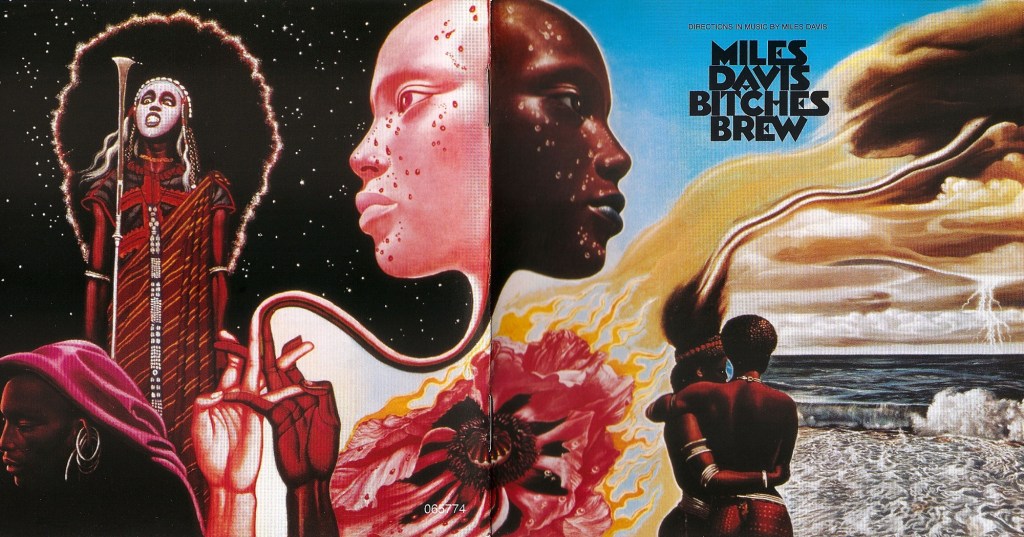
The Future Now: Bitches Brew And The Establishment’s Disdain
A common trope in fantastical fiction concerns the traveler who’s journeyed so far out that he’s lost the ability to communicate with the citizenry he came from. There’s something of this in Benny Green’s review of Miles Davis’ Bitches Brew in The Observer from this very day in 1970. Green, a famed British saxophonist as well as a respected critic, had played his own share of “uncompromising jazz” in his time. But to him, Davis was simply no longer playing jazz. It wasn’t a question of compromise or no compromise. It was more fundamental that that. Davis had been great and now he was simply corrupt. A betrayer of his talent, his calling, his discipline, his integrity, his audience.
How absurd it was to accuse Davis of betraying both his talent and the jazz tradition. If that was true, then every paradigm-shifting development in an artist’s work is by its very essence a betrayal to be fervently avoided. The cry of ‘heretic’ is, unavoidably, the death of change. Yet Green couldn’t see how daft his argument was. Bright and skilled as he was, he lacked the thought and language to process what Miles was up to. The new was in play and that’s always a challenge to recognise and respect. It was certainly daft of Green to presume, as so many did, that Davis was selling out to a rock audience. Yes, his new music was designed to embrace unfamiliar, larger audiences and performances spaces. But if Davis had been so very keen on selling out, then why would he produce music so new and fierce and challenging? And what was wrong with reaching out to new listeners with experimental forms?
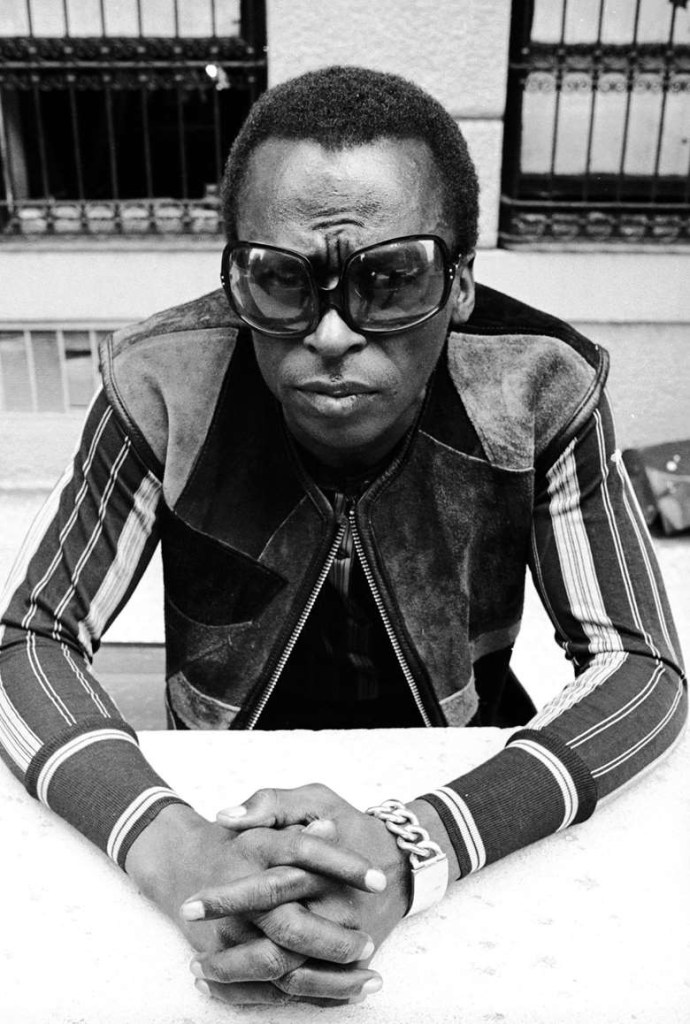
No one in 1970 would have recognised Afrocentricity in its modern sense(s). But Davis’ Bitches Brew is clearly recognisable as a project powered by the very same. (I’m well aware that I’m only the ten-millionth person to point this out, but it never ceases to be relevant to discussions of Bitches Brew and its critics.) Quite contrary to Green’s beliefs, Davis wasn’t interested to staying the subject of a fundamentally static tradition. Davis didn’t regard himself as anyone or anything’s subject, let alone someone else’s conception of jazz. In Bitches Brew, he was taking what inspired him from his own experience and creating new forms. In that, he was continuing to reclaim his past while recasting his future. (It was as true for the Bitches Brew cover by Klarwein as it was for music itself, of course, the future as seen through a reclaimed and reimagined past.)
I doubt Green ever recognised the irony, and the hugely unpleasant irony at that, of insisting that Davis stay in his place. Nor would he have recognised the sinister undertones of accusing Davis of being motivated only by laziness and money grubbing. Davis’ project was by contrast both fantastical and futuristic: it wasn’t a short-term con, and it wasn’t for anyone else to define it as Green did. The music could be listened to, experienced and criticised on its own terms. It could be disliked for what it was rather than what it wasn’t, and Davis could be understood in terms that don’t feel painfully close to the most grubby of stereotypes. But even today, in this future that Davis did so much to shape, that doesn’t always happen.
“Science fiction set in Cumberland”
In August 9th 1970’s The Journal, Matthew Banks’ Books In Brief column records a brief and rather endearing encounter with fantastical author Leslie Davies;
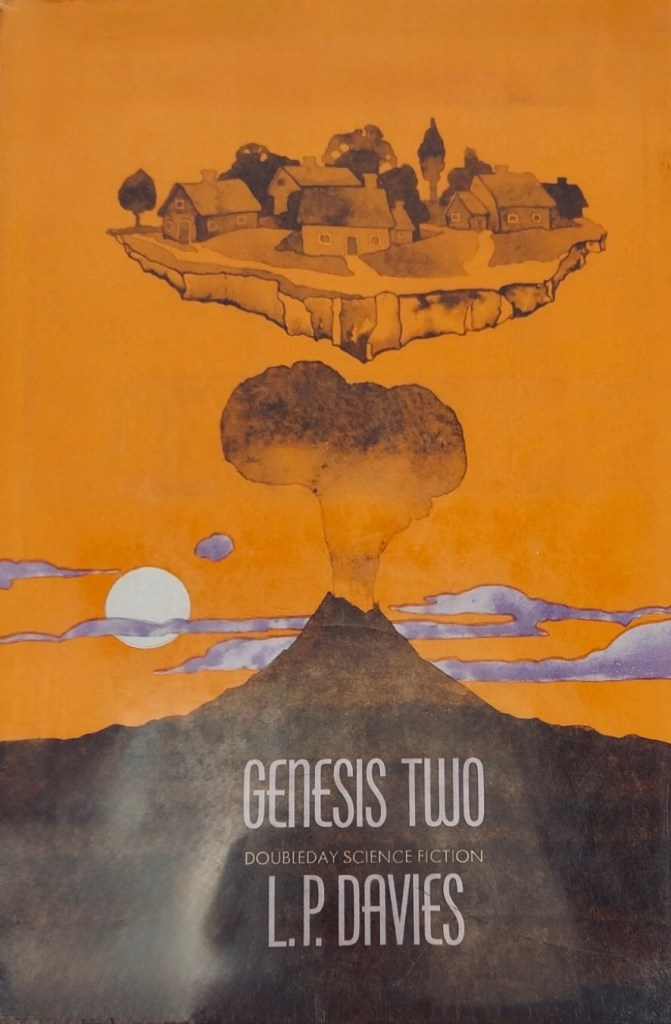
“Drop into Leslie Davies’ shop in Deganwy, North Wales, for a packet of cigarettes and the shop keeper may well stop pounding the typewriter on his counter to serve you. Davies doesn’t mind being interrupted. In fact, he likes it. His customers often provide him with characters and bits of dialogue for his books. There are now eight of them, and the latest Genesis Two is a science-fiction story set in Cumberland, where a handful of people wait for the water to submerge their village to make a new reservoir.”
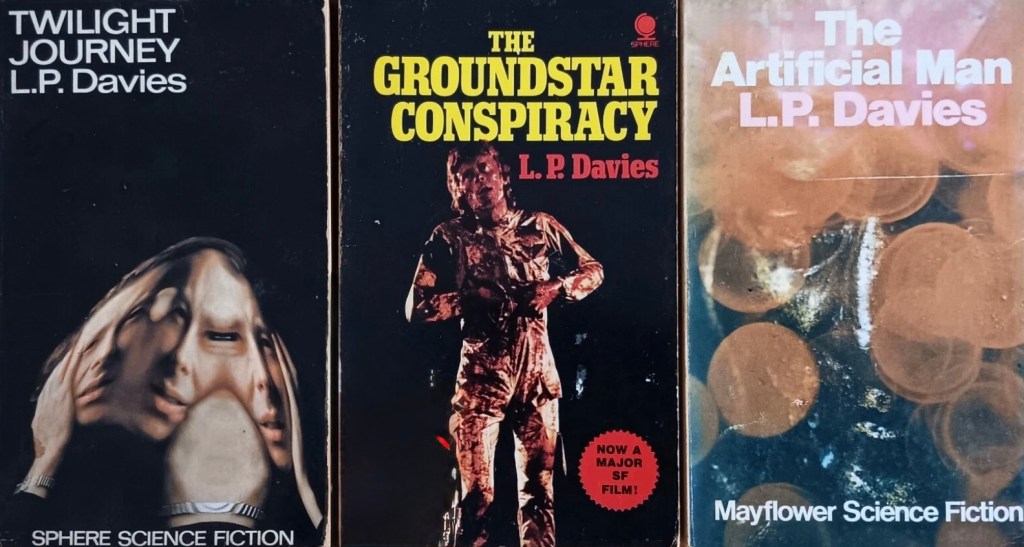
Three of Davies’ novels, we were told, had either been filmed or were in production, although “he means to keep his shop”. (Three screen projects would eventually see the back of the production offices in his lifetime: an episode of TV’s Journey To The Unknown, 1968’s Project X, and 1972’s The Groundstar Conspiracy.) Davies’ books are largely forgotten today, but this short piece makes him seem like a charmingly eccentric and thoroughly interesting man. He’d been, Banks wrote, “a pharmacist, optician … a painter in Rome … a tobacconist”. He was most certainly a dedicated writer. By the time of his last released novel, Morning Walk, in 1983, Davies had seen at least 21 books published.
What was the story doing in a Newcastle Upon Tyne paper? It makes me smile to think that the Northern setting of Genesis Two earned it a mention in The Journal. Local interest, winning out. News values work that way. Obeying a similar geographical imperative, The North Wales Weekly would also write about Davies this week. Here the paper’s interest lay with the novelist’s “young adult” novel Caregog Valley, set in a “mythical valley in a remote part of North Wales” and featuring “a Welsh Army”. Herein, we also learn that Mr Davies’ shop was in one Station Road, and that, due to his book’s apparent success in North America, he hopes to briefly shut down his tobacconist and visit his publisher across the water. He is, the article assured us, one of Wales’ most prolific science fiction authors.
Today’s Fantastical TV & Radio in the UK
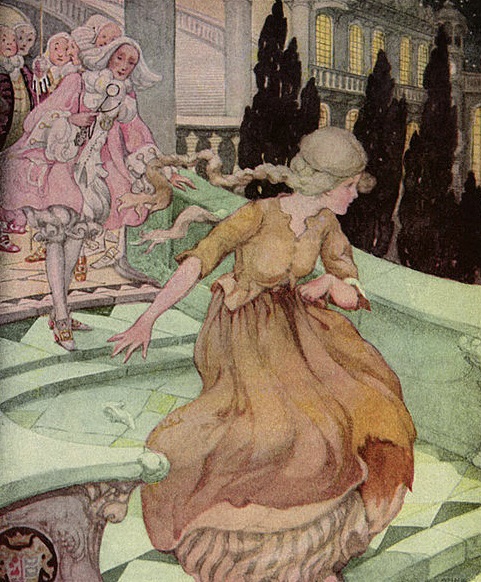
Cinderella Fleeing the Ball by Anne Anderson, c.1935
BBC Radio 3 – 3pm – Cinderella
“A fairy tale in four acts: Poem by Henri Cain after Perrault. English version by Henry Grafton Chapman. Music by Massenet Lu. The action takes place In legendary times.” (Radio Times)
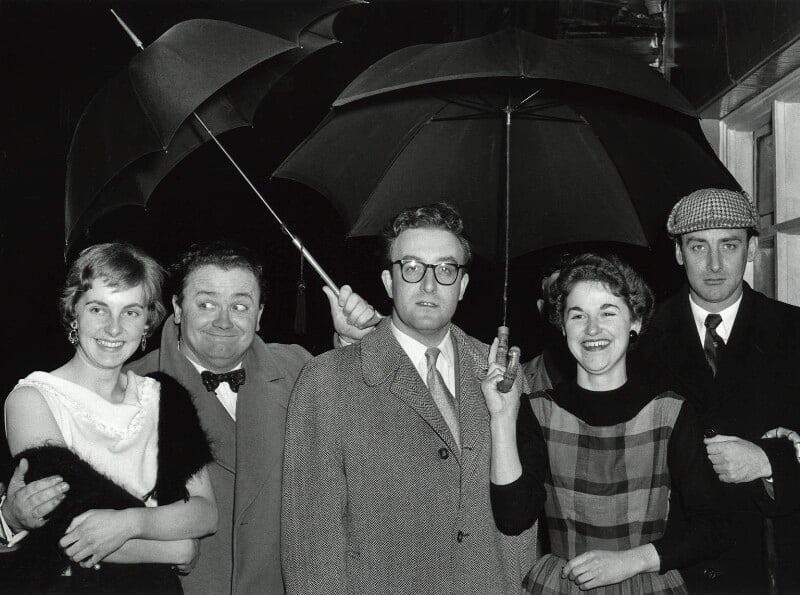
BBC Radio 4 – 8pm – Vintage Goons (first transmitted 1954)
“Peter Sellers. Harry Secombe and Spike Milligan in The Mystery of the Marie Celeste (Solved!): an involved tale of seagoon-faring with a fiendishly clever ending to this world-wide mystery. Script by Spike Milligan and Eric Sykes.” (Radio Times)
The Almanac Of The Fantastical will return tomorrow …

 The Almanac Of The Fantastical