
In The Year 2525 was a new entry at 29 in UK singles chart during this August week in 1969. It was a huge success for Zager & Evans in its day, but they would go on to be the only act to score a number one in both America and Britain without ever registering another chart hit.
“In the year 2525, if man is still alive
If woman can survive, they may find
In the year 3535
Ain’t gonna need to tell the truth, tell no lie
Everything you think, do and say
Is in the pill you took today”.
In 1969, Time magazine rather dismissively described the song as “a simple and schmaltzy tune and a chugging, nostalgic instrumental backup right out of the early 1950s”. Its cod sci-fi lyric, listing centuries-worth of possible apocalypses, was, according to Evans in several interviews over the years, written in 10 minutes or less. For all of that, it remains fascinating that a song as pessimistic about humanity’s future such have been such a huge hit in the same year as the first Moon landing occurred. Perhaps it was just coincidence. And perhaps it spoke, directly if banally, to a huge shared reservoir of doubt about the technological project and the world to come.
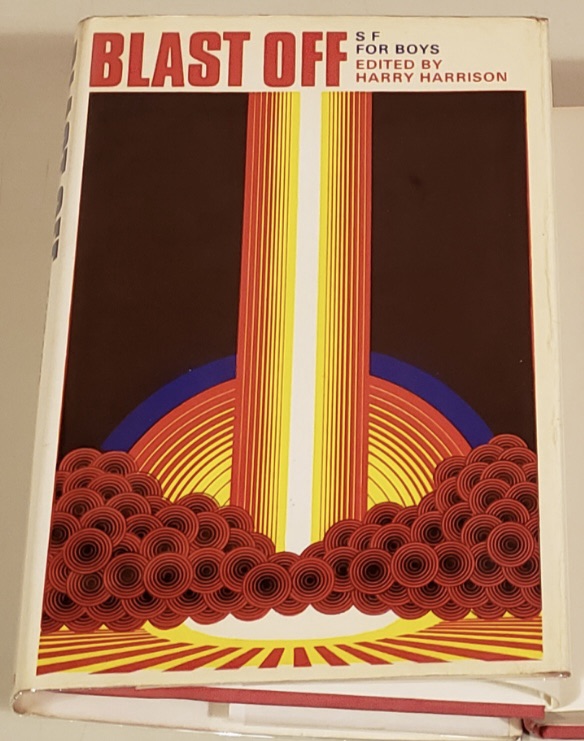
“Sci-fi for children”
In Friday 8th August 1969’s Guardian, John Rowe Townsend reviewed a newly published sci-fi anthology Blast Off – in hardback from Faber at 21 shillings – and begins by critiquing editor Harry Harrison’s introduction. Targeted at children, the very first sentence in the collection insisted that “Science Fiction Is For Boys”. Townsend responds by saying:
“It’s a remark that surprises me – and not just because my 16 year old daughter has always enjoyed SF. Surely plenty of people have pointed out by now science fiction, like other creative literature, is for anybody”.
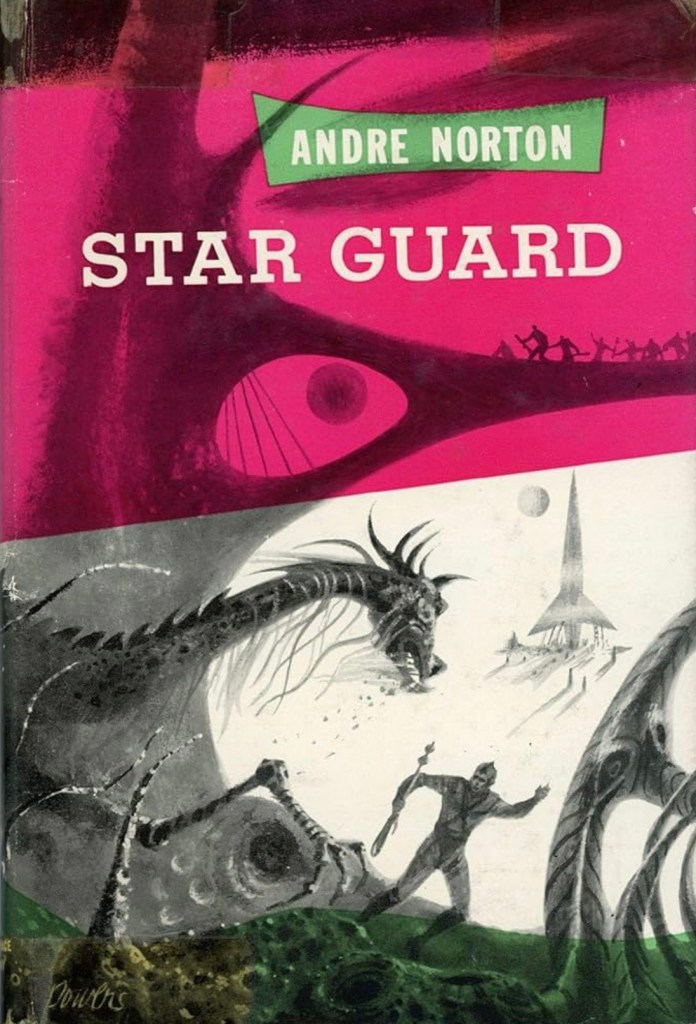
The other sci-fi novels reviewed in Townsend’s column were John Christopher’s The Lotus Caves, Robert Heinlein’s Citizens Of The Galaxy, and Andre Norton’s Star Guard.
In the same day’s Coventry Evening Telegraph, the childrens’ books section as written one ‘Uncle Tony’ also looked at young people’s sci-fi titles. Charmingly, the piece was inspired by “Miss Christine Short, who lives in the Earls Court, Coventry (and was) a children’s librarian at Dudley, Staffordshire”. She’d written to said Tony with the sci-fi recommendations of her young borrowers. The list she’d distilled from their preferences included 1961’s Moon Base One by Hugh Walters, 1969’s aforementioned-mentioned anthology Blast Off: Sci-Fi For Boys, the 1960s set of collections Out Of This World as edited by William Ellis and Owen, 1967’s Worlds To Come collated by Damon Knight, 1958’s To The Edge Of Beyond by Cpt W. E. Johns, and 1967’s Space Hostages by Nicholas Fisk. In addition, the librarian wrote that her readers also enjoyed stories by “Patrick Moore, Paul Berna, Andre Norton, James Blish, Robert Heinlein, Alan Norse, Lester del Rey, Joan Clarke, E C Eliot, Angus McVicar … H G Wells and Jules Verne”.
But again, as you would expect, a measure of sexism leaks into the well-meaning piece. In ‘Uncle Tony’s’ introduction to the article, he writes that the suggestions are intended “as a help for those boys, and girls, who want to read more about “SF” books”. The inclusion of those two words – “and girls” – simply helps to underscore that this was still, in essence, a genre thought of as being intrinsically masculine. As does the presence of Blast Off: Sci-Fi For Boys, of course. You can almost hear those poor boys, young and old, shivering with horror at the very idea of girls – girls! – in their clubhouse.
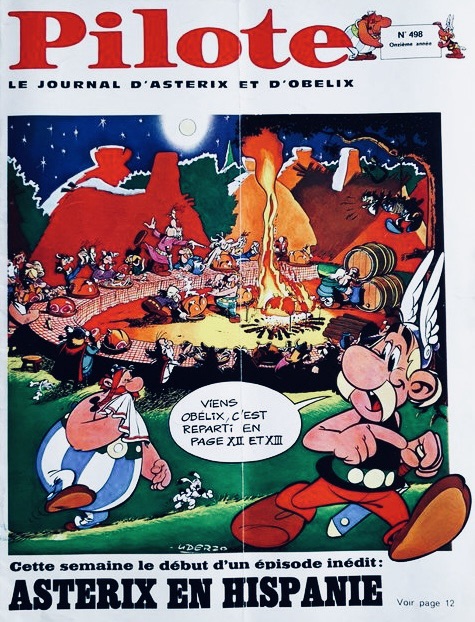
A Brief But Hearty Cheer For “Pilote”.
I have more than once felt that I’ve missed out by not being French. (This is not something that folks living in England are supposed to own up to, so please do forgive me on the matter.) One of the reasons why I’ve looked up to our neighbors across The Channel is the French comic book industry. In 1969, the comic Pilote alone published a string of stories that were the equal at least of the very best British strips. Several of those serials would go on to be collected in hardbacks and many of them retain a considerable reputation even today. Right the way through the August of 1969, for example, Uderzo Albert and Goscinny Rene’s Asterix In Spain was being serialised. Overlapping with it in Pilote at different moments in the same month, to take but a few examples, were Valerian: The City Of Shifting Waters by Christin and Mezieres and Blueberry: The Mine Of The Lost German by Charlier and Giraud. Soon after the Asterix tale was wrapped up, in stepped another Valerian adventure – The Empire Of A Thousand Planets – and Lucky Luke: Western Circus by Rene and Morris.
I have no doubt that the features from those August Pilote issues that I don’t recognise, to my shame, include several more classics too.
The 5-Minute Comic Break
In The Birmingham Evening Mail of today in 1969, crime novelist Mrs Isobel Lambert was interviewed about what we might today call the “work-life balance”. To Jane Holden, Mrs Lambert explained that she “plans her writing around her husband and her home life”. Despite having sold 9 novels, she says that “all she has ever been paid for a detective novel is ‘£85 and no royalties'”. It’s a sobering portrait of how exhausting and ill-rewarded the life of a woman writing paperback fiction could be. And yet, Mrs Lambert seemed very happy with her lot. Her husband, 35 years her senior, was a clearly well-paid globe-trotting consultant engineer. Together, they’d travelled the world. The marriage allowed her the freedom to give up teaching and focus on – after husband and home – her writing. It leaves the reader happy for her, and yet keenly aware that few women without affluent, understanding spouses could afford such an ill-rewarded, albeit successful, writer’s life.
Her opinions on the role of comics and magazines are worth quoting;
“Most women are too busy to read books. Most children can’t be bothered outside of school. That’s where comics and magazines are so good. They cater for the ‘five minutes over coffee’ readers, and today, that’s worth any number of classics in hard covers”.
It’s the kind of assumption-ladened statement that could trigger any number of social media breakdowns today. Women are what? Children are what? Schools are what? Comics and magazines are, yes, what? But regardless of its validity as historical truth, it is a rare and fascinating insight into how the likes of comics and magazines could be viewed in 1969.

The Almanac Of The Fantastical will return tomorrow …


