1. In Which Jack Kirby Has One Of His Least Productive Months For Marvel Comics
To focus on Jack Kirby’s astounding productivity for a moment, here’s a brief summary of his new pages published during this very month in 1965. The result, as you’ll see, is thoroughly impressive, although it’s hardly the greatest number of Marvel Kirby pages to reach the newsstands in a 30 day period. Of course, a bald statement of productivity doesn’t tell the half of Kirby’s workload on these titles. He was in effect the tales’ writer too, with Stan Lee contributing, mostly, brief plot outlines and dialogue. In addition, Kirby was also designing everything in his tales. It was an utterly ferocious body of responsibilities, and, sadly, infuriatingly, it was never fully publicly recognised during the period. Or indeed, for many, many years afterwards.
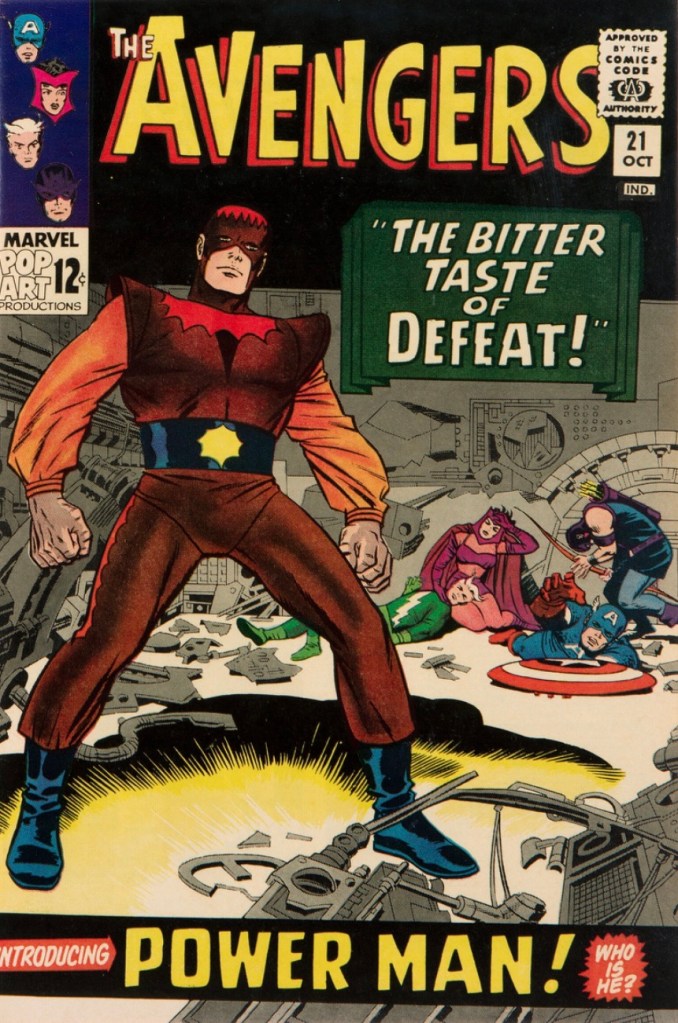
Kirby was ‘only’ the cover penciller for Avengers #21, with inks coming from the brilliant Wally Wood. (1 page of pencils.)
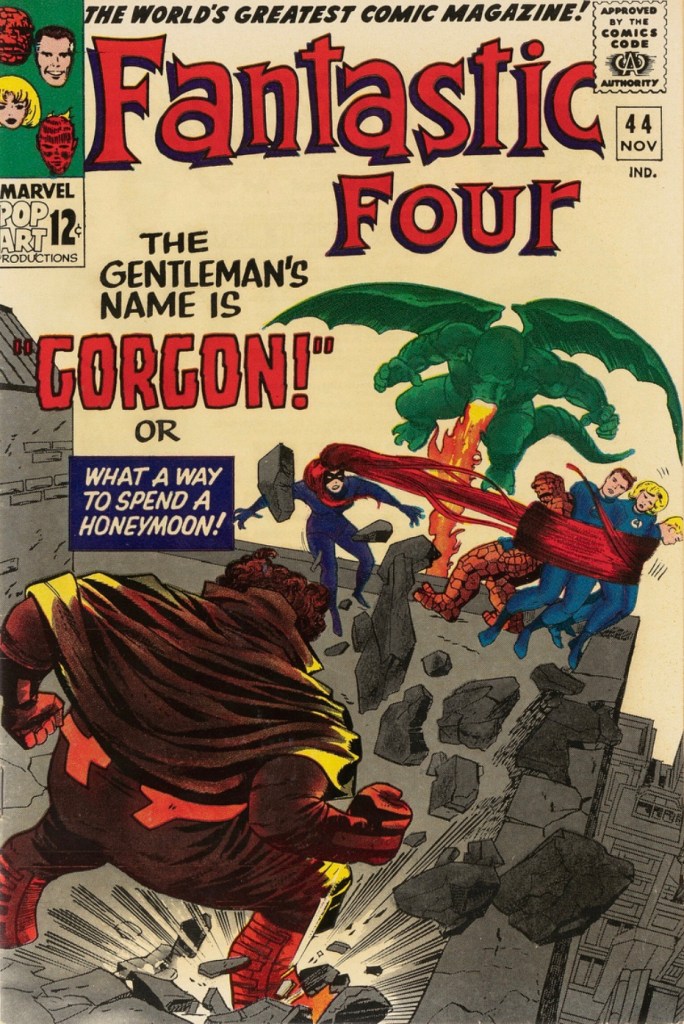
Kirby’s pencils for this cover were inked by Vince Colletta, while inside, 20 pages of story were finished by Joe Sinnott and 2 more by Chic Stone. (running total: 24 pencilled pages, inc 2 covers.)

A second Kirby cover inked by the controversial Colletta, with 21 interior pages for two separate tales by the same team. (Running total: 46 pages, with 3 covers.)

The estimable John Severin inked this JK cover, with the same team collaborating on the 12 pages Agent Of SHIELD feature inside. (Running total: 59 pages, including 4 covers.)
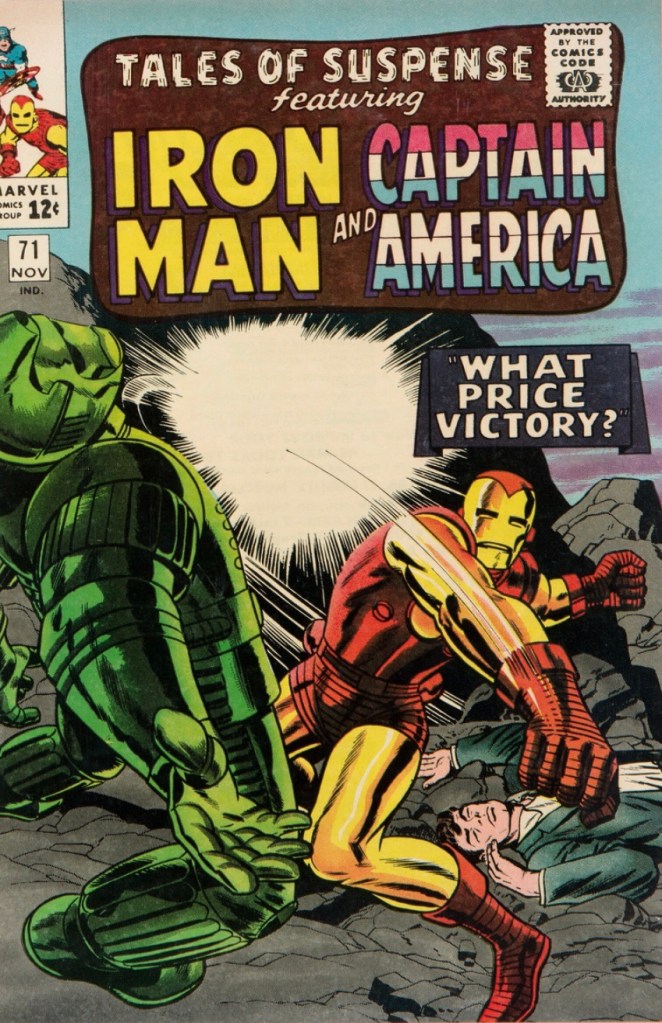
Here we see another Wally Wood/Jack Kirby collaboration. Inside Kirby provided layouts for George Tuska’s pencils on the Captain America strip. (Running total: 60 pages of full pencils, including 5 covers, and 10 pages of layouts.)

Finally, Kirby’s main cover illustration above was inked by Mike Esposito. For the Hulk strip inside, Kirby created 10 pages of layouts for Bob Powell. (Running total: 61 pages of full pencils, including 6 covers, along with 20 pages of layouts.)
Amazingly, this was far from being Kirby’s most productive month at Marvel in terms of pages published. (Forgive me if my maths is out by a page or two.) It’s astonishing to think that all of these tiles were released in a 8 day period, shipping on the 3rd and 10th of August 1965.
2. The Man From UNCLE: The Spy With My Face
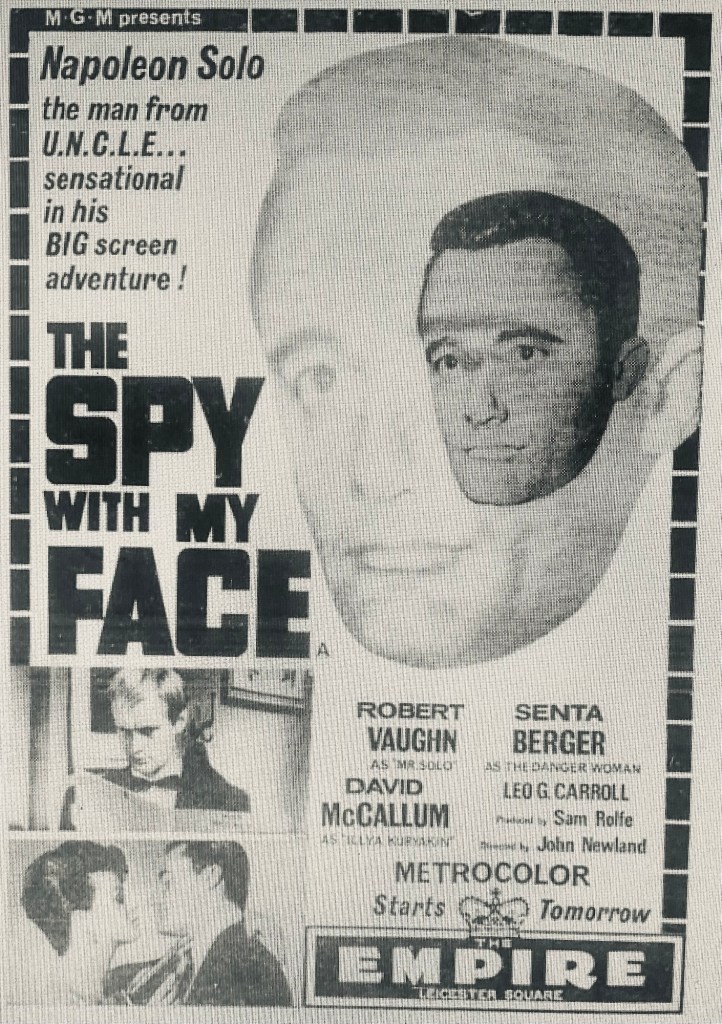
Forgive the poor reproduction of the scan above, from August 4th’s London Evening Standard, but there’s something thoroughly exciting, even at this remove, about a press ad promising that an exciting movie is to open tomorrow! The Man From U.N.C.L.E. TV show itself had only debuted on BBC-1 just two weeks or so beforehand, but it was already doing well with British viewers. (In America, it had begun in September 1964.) The movie itself is an expanded version of the series episode The Double Affair, which hadn’t yet been shown over this side of The Atlantic. Better yet, for those Brits already getting a taste for the TV show, the film version was in colour. Colour! The BBC wouldn’t adopt colour for another four and more years.
There are signs that the film’s distributers didn’t entirely trust to the success of The Spy With My Face. You can see from the ad above that the movie isn’t explicitly sold as an U.N.C.L.E. spin-off. Instead, in an attempt to catch the slipstream of the hugely-profitable Bond movies, the prospective punter is presented with a single dark-haired spy, Napoleon Solo, and the familiar actor playing him, Robert Vaughan. David McCullum’s Illya Kuryakin barely gets a look in. (That would, of course, swiftly change.) Nor is the very first U.N.C.L.E. movie – May 1965’s To Trap A Spy – referenced, as if its lower-key UK success hadn’t been grand enough to tap into.
The film’s national release schedule also suggests that the distributors lacked confidence in their product. It was customary for films to bed in as best they could in London’s lucrative West End cinemas before being released nationally. Perhaps because a long stay in the capital wasn’t foreseen, or maybe because the summer holiday audiences were there to capture, The Spy With My Face was released right across the nation even as it opened in London. Cinema goers in Derby, for example, could catch the film straight away at the city’s A.B.C..
Whatever, The Spy With My Face was, from the off, a great success.

3. Today’s Fantastical TV & Radio in the UK
BBC One – 6.55pm – Tomorrow’s World series 1
“Tomorrow’s World …in the making today … Raymond Baxter introduces film, outside broadcast, and studio reports on the men and the developments which are changing our way of life.” (Radio Times)
Sadly, for those in the Britain of1965 who were hoping for something with the taste of the fantastical on TV, this episode of Tomorrow’s World featured not the likes of computers or satellites, but a discussion of whether the lifting of trade preferences would ease the nation’s industrial decline. Oh, dear.
The Almanac Of The Fantastical will return tomorrow …

 The Almanac Of The Fantastical
I think we tend to take Kirby’s incredible proficiency for granted but seeing stats like these really brings home just what a creative powerhouse he was. The majority of the work here is excellent, but the Fantastic Four issue shows the King at the beginning of the purplest of purple patches. The amount of Kirby kreations that he kicked out in just a couple of years on this mag is staggering: the Inhumans, the Watcher, the Silver Surfer, Galactus, Him, the Kree, the Black Panther. The mind boggles.
LikeLike
Hi Simon – I think you’re quite right about how easy it is to take Kirby’s work in one way or another for granted. And doing this kind of exercise served as a real wake-up call for me, as it’s one thing to KNOW Kirby did a huge amount of work and another to ITEMISE it all. It somehow brings his remarkable creativity and discipline to life. Certainly it underscored something I’ve long believed: the Marvel Revolution was grounded in Kirby’s brilliance and self-discipline. Of course other creators played major, major roles. But Kirby was the powerhouse and the workhorse. Without him, the ‘Revolution’ in any form can’t happen.
LikeLike