Ralph Steadman Dunks President Ford In A Huge Stinking Vat Of Horror
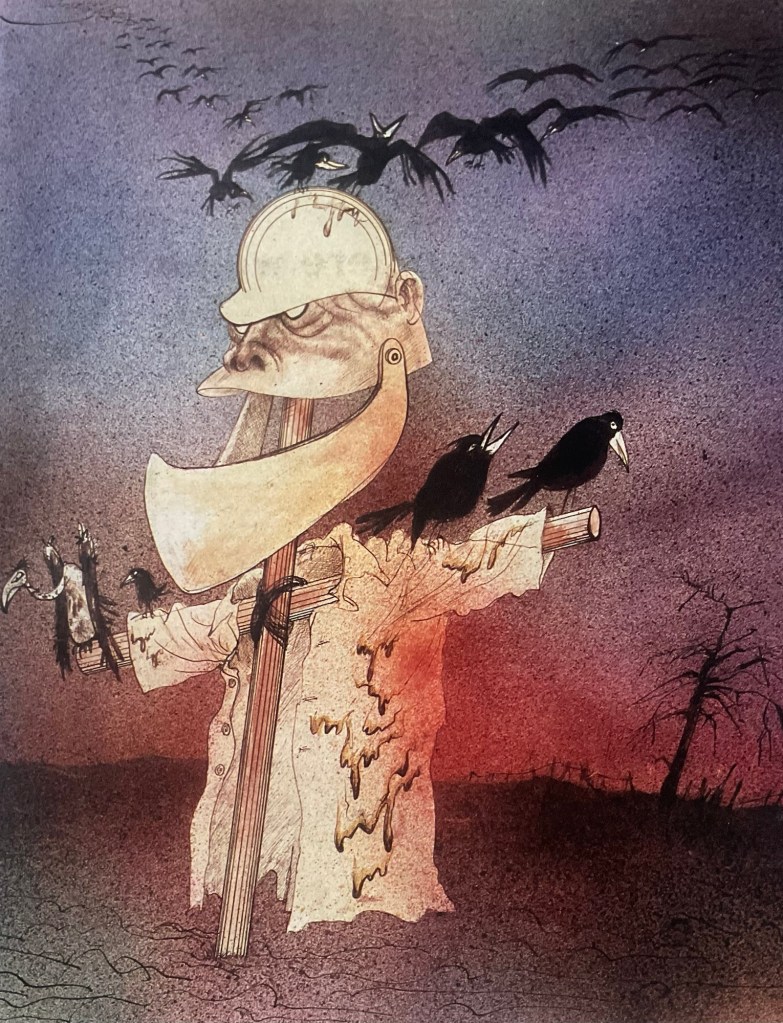
In this week’s Radio Times, an article about the 1976 Republican National Convention was accompanied by this wonderfully acerbic Ralph Steadman painting of President Gerald Ford as a scarecrow presiding uselessly over the ruin of America. Rather than scaring off carrion, he’s nothing more or less than a wasteland stopover for them to – how to put this? – evacuate themselves on. I’ve read Ford’s likeness here described as Frankenstein, and if it is, it’s the head of the monster’s corpse, its only function being to lend rest to the eaters of the dead. It’s a fabulously coruscating image, made all the more remarkable for being a portrait of America’s then-President in one of the UK’s bestselling all-ages magazine.
Rick Griffin’s Psychedelic Exhibition At London’s Roundhouse
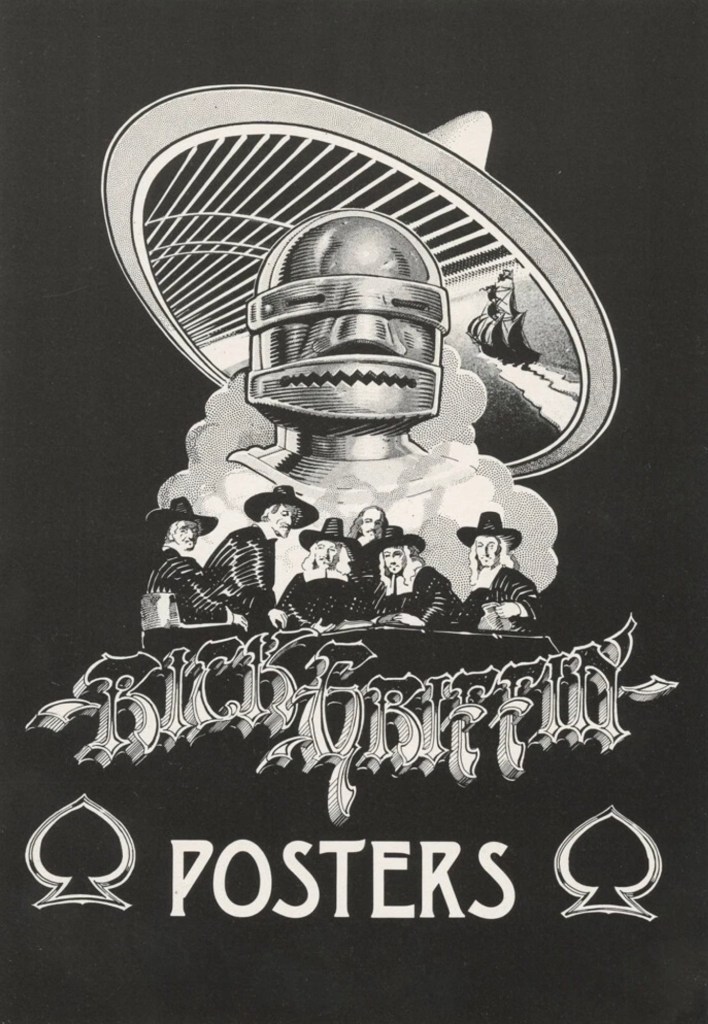
Above is the poster used to advertise the summer 1976 exhibition of Rick Griffin’s psychedelic/underground posters at The Roundhouse in London’s Camden. With his lysergic concert posters and album covers and comic strips, Griffin had helped forge the shared visual iconography of much of America’s Sixties counter-culture. For a good many years, his work was, after its own fashion, revolutionary. Then, as if metamorphosing from pop culture matter to anti-magic, it began to seem, to some, not only passé, but stale even to the point of putrescence. Punk in all its forms with all its fellow travellers was already gathering pace. But for all of that, Griffin’s London show was, by all accounts, a major success. The press was positive, the attendances high. As with all art that had once appeared inseparably bound to a specific moment, his had in part slipped loose from its original moorings. As time passed, the partial disassociation would continue. Years before, Griffin had spoken directly to specific communities in particular places at unique moments. There had been a feedback loop operating from sub-culture to artist and back again. Now, Griffin and his creativity existed more and more in the context of, well, Rick Griffin. Griffin himself had undergone a profoundly-embraced conversion to Christianity. Society had changed and so had he.
Whatever else, Griffin’s posters and pages were in their essence very, very pretty and, frequently, very, very funny too. Their appeal could run from, in the eyes of the beholders, an air of kitsch to an unvarnished and entirely understandable fascination with luminous colour and fluid form. No doubt nostalgia, with or without any tribal loyalties, played a large part too.
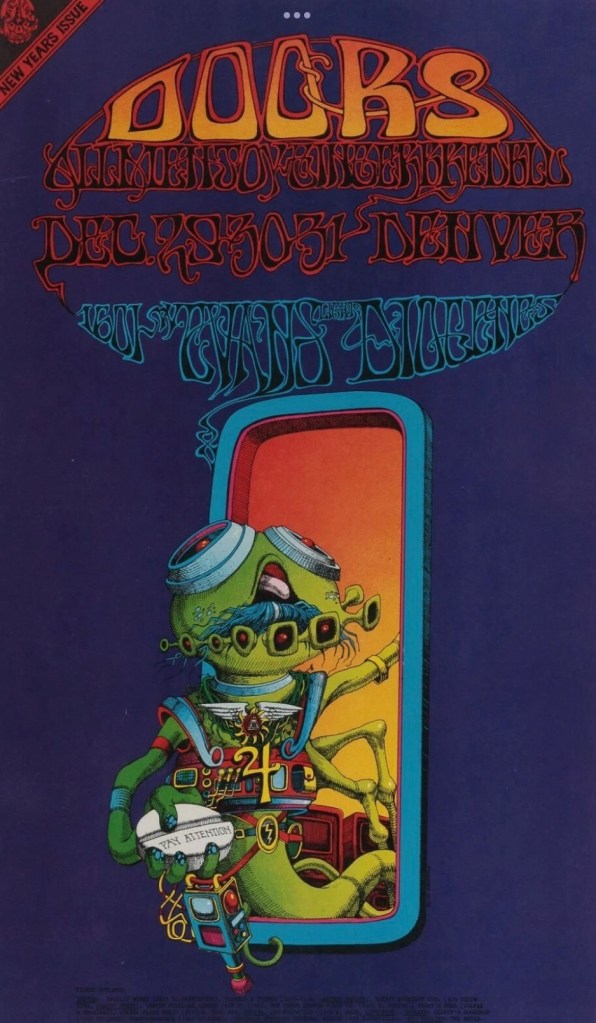
The association of his artistry with the 60s would never, and could never, disappear. The Roundhouse exhibition, for example, came with a psychedelic light-show and live songs by the Grateful Dead. But what had once been essential to a pop-culture moment had become an optional extra in a contemporary context. Far away in time and space from the Acid Tests and the Avalon Ballroom and The Family Dog Denver, Griffin’s 1976’s European exhibition was, by all accounts, notably popular in its own right. It attracted queues in London and went on to success in Sunderland and Amsterdam too. A very considerable number of posters were sold. A good time was had by all who were up for it. An adoration for joss sticks, feeling mellow and loving Country Joe and The Fish wasn’t mandatory. An antipathy towards the same needn’t have been a problem.
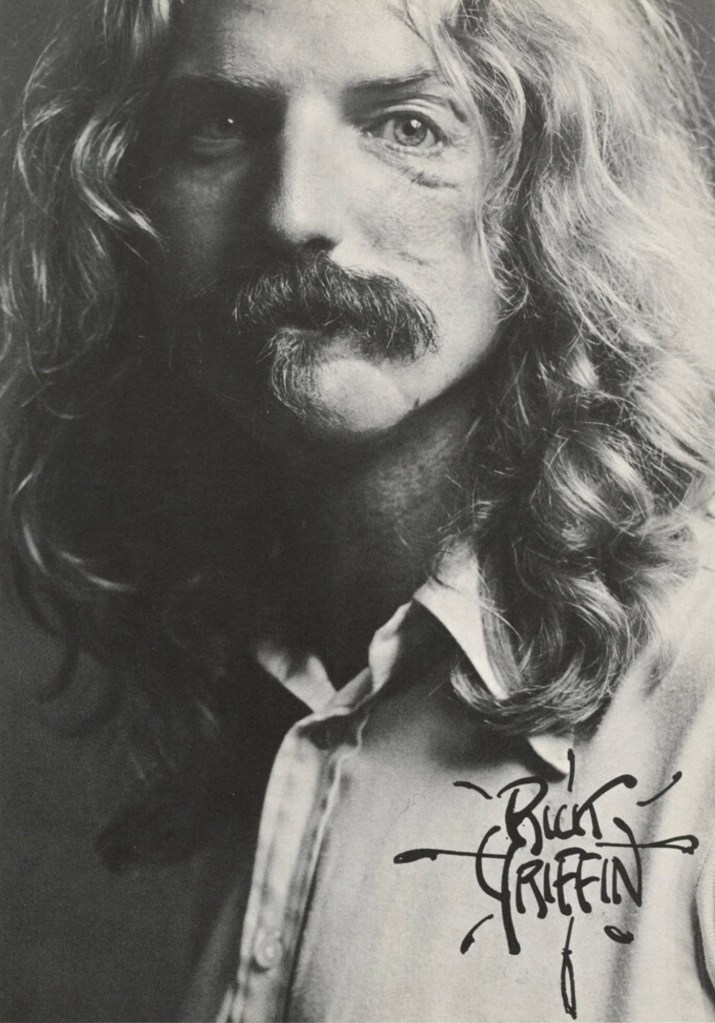
In the month in which Griffin’s work was being shown in the UK, the nascent Sex Pistols played two London concerts. Both Griffin’s posters and the band’s performances were events to catch and enjoy. But the culturequake of the latter wouldn’t ever obliterate the pleasures of the former, no matter how the mono-culturalists of The New would insist that it should.
As someone who experienced the intense friction between sub-cultures during the period, it makes me smile to think of a Rick Griffin poster hanging next to, say, a Jamie Reid one on someone’s wall today, with neither seeming to be in active conflict with each other. Different, but hardly the pairing of a truth with a heresy, whichever is considered the first and the second.
The Almanac Of The Fantastical will return tomorrow …

 The Almanac Of The Fantastical