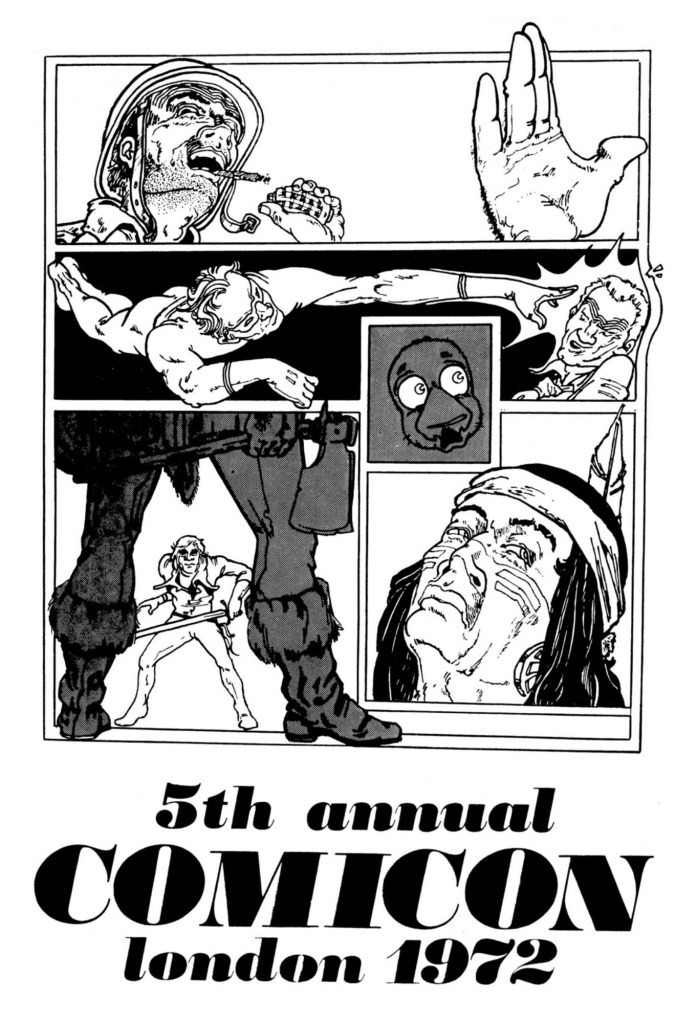
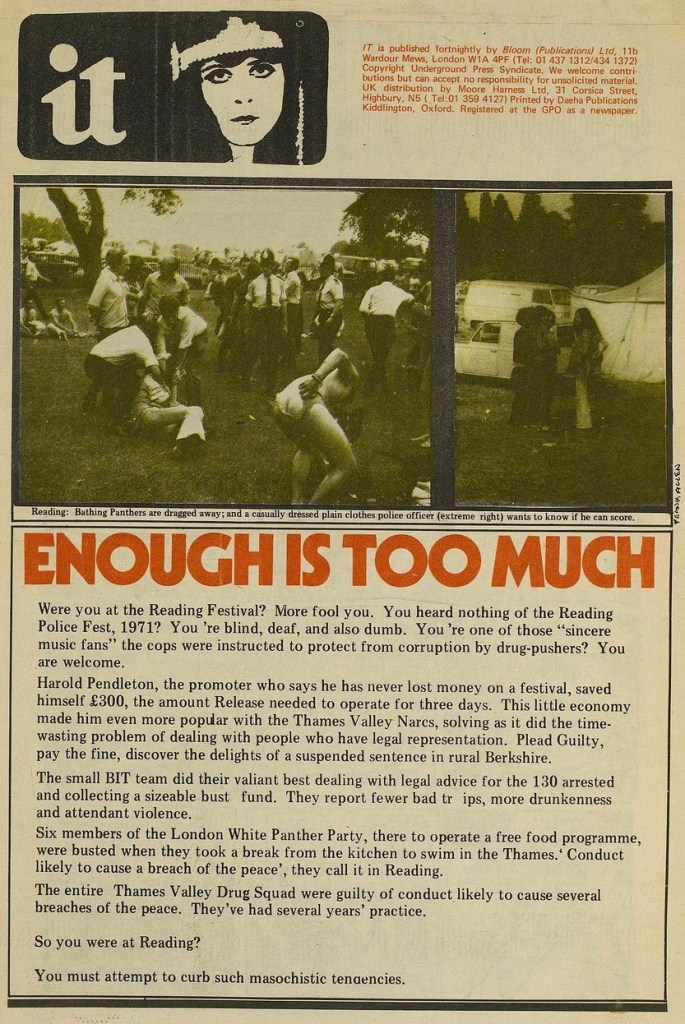
In iT #136, Ges Cox painted a picture of the first day of Comicon ’72:
“The downstairs suite of the Waverley Hotel is packed with freaks, odd looking people in their Saturday casuals and straight comic collectors, all milling round surrounded by piles of old posters, tables which groan under the weight of old Marvels, 1944 EGs, Beanos, Comic Cuts. Hoards of pages being turned, lists checked, gazes of admiration being cast on ‘mint conditions’ prices and swaps negotiated and sealed .. The happy teenage organisers sit with their enrolment forms, leaflets, badges, rubber stamps and cash boxes, but no drawing pins or sellotape as they would damage the hotel’s walls.”
(The Almanac discussed the earliest mentions of the convention here.)
Tickets were £1 – or almost £6 in 2025 money – on the day, but all the hotel’s rooms had already been snapped up in advance by comics fans. It was estimated that somewhere around 20 000 comics were on sale, which included the all-important latest American titles from Marvel and DC. In Rob Barrow’s Think Off column in Comic Media #7, a total of “well over” 300 visitors to the con over the weekend was given, although only around two-thirds of that number had actually registered and paid. (Names written in the register book included the famed likes of Donald Duck, Kull the Conqueror, Neal Adams, Ted Heath, and Berni The Bolt from The Golden Bolt TV show) Making friends, or at the very least contacts, was, as it has always been at cons, a key aspect of the weekend for many. Speaking at 2009’s ComICA, artist Brian Bolland recalled making contacts at the 1972 con that greatly helped his career.
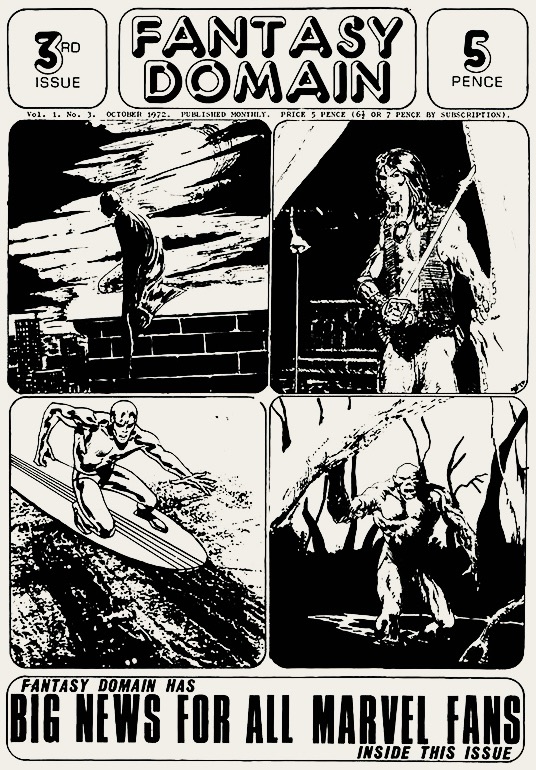
Over the weekend, there would be three auctions, the first of which was later criticised for a lack of organisation. Indeed, the central problem of clear aims transmitted with clarity to all attendees echoes through even largely positive accounts of the weekend. In Fantasy Domain #3, for example, Barrow reported:
“Everybody I met seemed to be having a good time and the atmosphere was friendly. I have heard criticism of the organisation, but I bear in mind that Nick Landau, who organised it, had never done so before, and so was lacking in general experience.”
It was generous perspective given that the previous months had seen something of a considerable spat between Barrow, and his supporters, and Landau and his collaborators. It was also, by all accounts, a generosity that was entirely justified. Yet there were evident problems that really ought to have been foreseen and planned for. For example, the con was scheduled to begin at 2pm, but some folks were allowed in at around 11am, giving them a clear headstart on their fellow fans when it came to sampling seller’s wares and securing bargains. Such things never help the mood at conventions. Still, there was clearly more than enough product on sale in the afternoon to generate a “frenzy” of buying. Unfortunately for Dez Skinn, a trunk load of comics was stolen, which, according to Rich Johnson, stands as evidence that “the thieves had arrived”. Not everything that came with the incrementally rising profile of comics was welcome.
Further trouble occurred when a group of underground fans and sellers arrived to find the table they’d booked wasn’t available, leaving, in the words of Ges Cox, their “boxes of precious cargo … Zaps, Furry Freaks, Mr Naturals, Bents and Binky Browns together with those infamous Nastys” without a surface to sell from. Eventually, some liberated tables from hotel stock got around the problem.
Several celebrities from the world beyond the narrow confines of comics were present. Comedian, TV quiz show host and all-round TV personality Bob Monkhouse was noted by several folks buying up masses of comics and memorabilia. He even attempted to buy the Star Trek blooper reel that, fresh to these island shores, had so delighted the convention that it was shown 3 times. Monkhouse, of course, was an ex-comics professional as well as a celebrity, having made a living in the 1940s as a cartoonist in UK weekly titles. He never hid his affection for the medium and its history. Cox, surprised at Monkhouse showing a genuine interest in his undergrounds, wrote that BM showed “great taste and knowledge of cartoonists, cigars and banks”. Also present was Terry Gilliam, the then-Monty Python animator, writer and performer who was, in 1972, infused with a remarkable degree of counter-cultural cool. As with Monkhouse, he’d also worked an apprenticeship of sorts in the industry, with the great Harvey Kurtzman on Help magazine. Here Gilliam debated with Jim Nurse, managing director of Halas & Batchelor, which, at the time, was the largest animation company in Europe. Theirs was by several accounts a passionate, good-humoured chinwag about the best methods of cartooning, limited or full. (Nick Landau moderated the discussion and recalled Gilliam being “very excitable” and the debate seeming very heated.)
The evening was split between film-watching and conversations at the hotel bar, with the Crew from the counter-culture being asked to leave because of accusations of general drunkenness, loudness, unpleasantness and, it’s hard not to believe, looking and behaving like dangerous longhairs. Police were called, and pleas for support to the other comics fans went unheeded. It’s hard to imagine what they could have done. A significant cultural divide was, if Cox’s account is to believed, at work. But then, it was everywhere in 1972.
Sunday 6th August 1972 saw the second and final day of this Comicon. It seems to have been a much quieter day. Despite voluminous overnight restocks by dealers pleased by Saturday’s takings, the buying was reported to be a more sedate affair. Events wound down with a several more auctions and, for the few fans remaining as the afternoon ebbed into the evening, a couple of films including Judex. Eleven months later, in July 1973, fans would gather again at the Waverley Hotel to do it again. Once again, although for several different reasons, it would be both a somewhat fraught and a really quite enjoyable experience. Con organiser Nick Landau had imagined his time running such shows was behind him. 1972 had been, he’s said, rather “stressful”. But circumstances would see him return to the role in the following year. It’s very hard not to admire his efforts.
The Almanac Of The Fantastical will return tomorrow …

 The Almanac Of The Fantastical