Relying on the gig pages of the UK music press can’t be said to be an entirely reliable business. Gigs were often cancelled, dates and venues rearranged, and schedules can prove to be highly misleading. (In Sylvain Sylvain’s fine memoir of his life as a New York Doll – There’s No Bones In Ice Cream – he several times refers to the gigs accepted as part of the historical record that the Dolls themselves never actually played.) But relying on whatever collaborating information I’ve been able to dig up, here’s the most promising gigs for the week of the 20th to the 26th of July 1972. (The seven day period from a Thursday to the following Wednesday was a music paper week, reflecting the publishing scheduled of UK papers such as, but not limited to, the New Musical Express, Melody Maker, Sounds, and Record Mirror.)
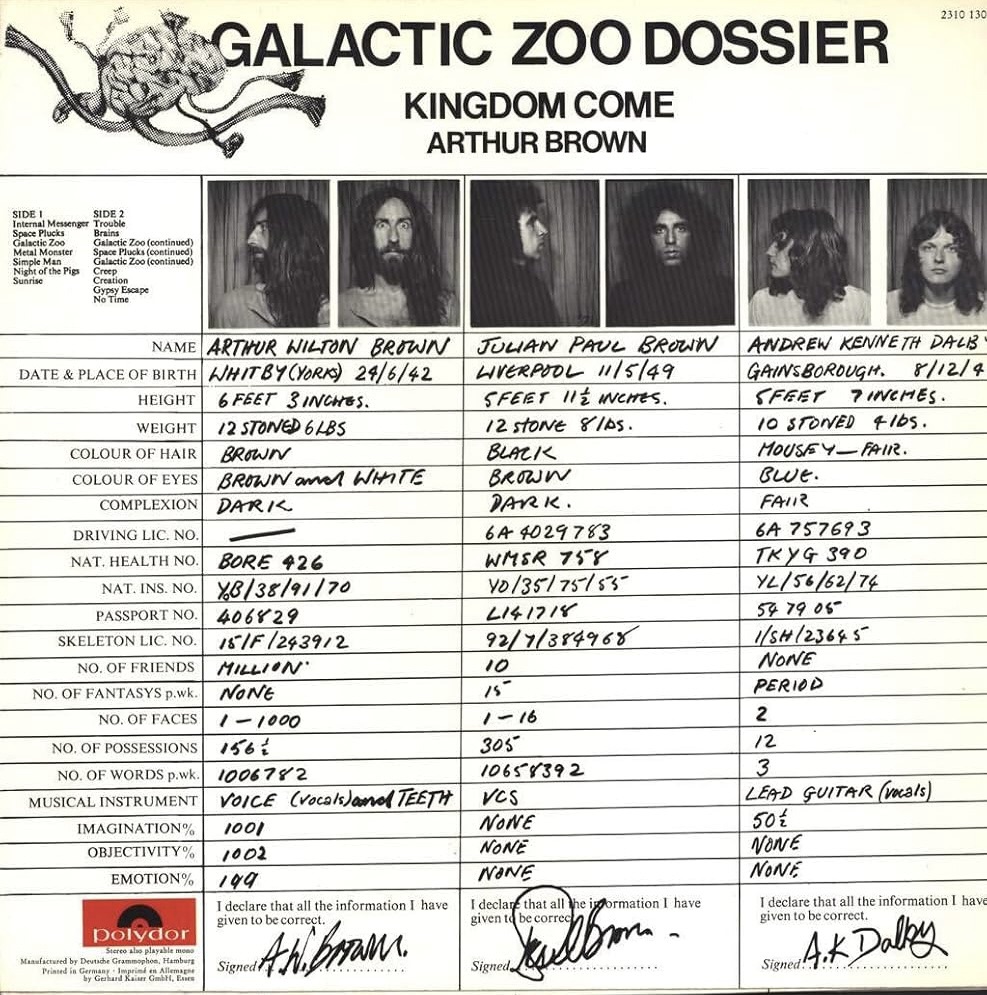
Thursday 20th – Hastings Pier: Arthur Brown’s Kingdom Come
Apparently support band Swastika, with their name illustrating a pyrrhic triumph of idealism over common sense & decency, failed to turn up, so Mr Brown and his colleagues played an extra-long progressive set which included the singer setting light, as tradition now demanded, to his own precariously helmeted head during Fire. As you can see from the track list of 1971’s Galactic Zoo Dossier LP above, the fantastical was absolutely central to band’s work.
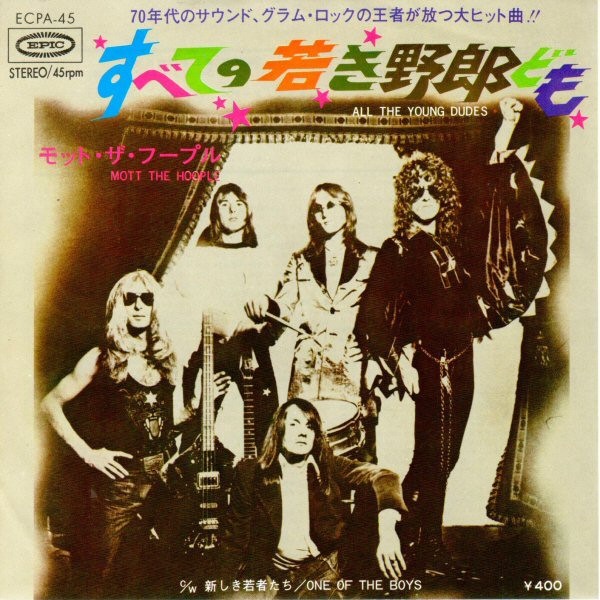
Friday 21st – Doncaster Top Rank: Mott The Hoople
Long before Bowie, there was already something of Droggishness about Mott. They were a gang, they were outsiders, they were, in the NME’s words, “merry” practitioners of “straight-ahead piledriving rock”, and, in their unforced authenticity, they came across as if they weren’t taking anything of any kind from anyone. Ian Hunter never looked like one to mess with. To see them at Doncaster Top Rank raised up by Bowie’s patronage and their performance of his All The Young Dudes would have been to catch them at a public moment of transformation. From an underachieving people’s band to a substantially successfully people’s band. From being seen as rockers to being regarded as glam rockers. From an album band to a singles act too. History tells us they carried most diehards with them. Was there any eye-liner at all on show tonight, on the stage or on the floor? The band’s look on TV clips of the single don’t seem as if anyone has opted for the baconfoil and the Dave Hill platforms. And if there was a touch of glitter, who approved of it and who didn’t, and how did they show it? I’d liked to have seen that all play out, and especially as Mott’s days in the glare of what looked very much like onrushing success had so far been so few. It’s always fascinating to watch a band negotiating its way through a change of image and standing, no matter how slow and partial. Ian Hunter and his comrades pulled it all off well. But those first few days in particular, that would have been something to see.
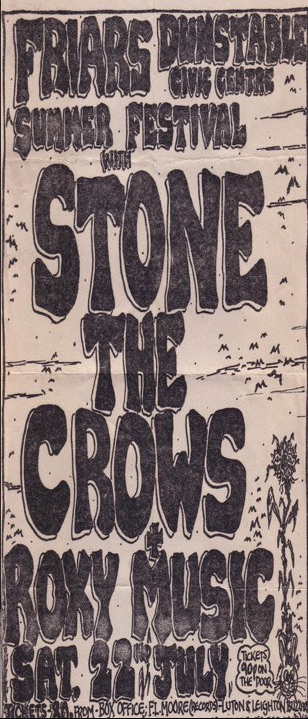
Saturday 22nd – Friars Summer Festival at the Queensway Civic Hall, Dunstable, Kent: Roxy Music supporting Stone The Crows
Nominated as the most promising gig of the week in the NME, this festival, as run by Aylesbury’s famed Friars Club, saw the catastrophically unfortunate blues-rock band Stone The Crows, who’d disband in 1973, supported by the up-and-coming art-glammers Roxy Music. Punters at Friars were famously supportive of imaginative, theatrical bands, with both Bowie and Genesis regarding the club as a stronghold. So it’s good to imagine Roxy kicking off in all their finery with Virginia Plain, their typical set-opener in the period, and receiving a warm welcome rather than bafflement or even hostility.
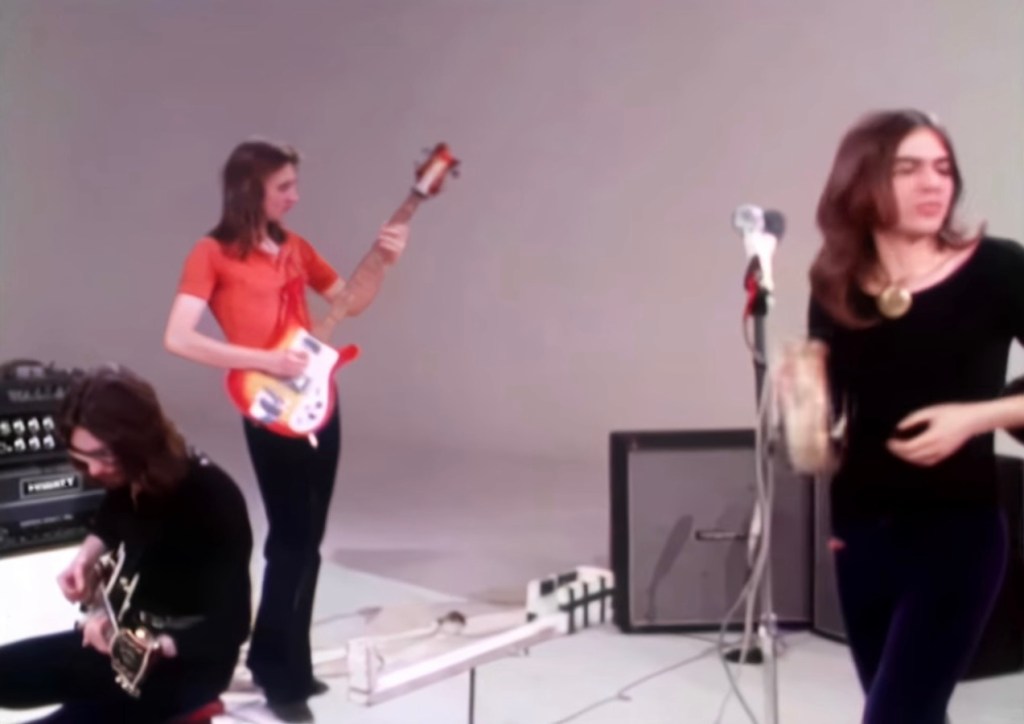
Sunday. 23rd – Epping Wake Arms pub: Genesis
It fair beggars belief to note just how many gigs Genesis played during the period. Since beginning touring in support of their Nursery Cryme album in August 1971, they’d played some 200 shows. After tonight’s pub gig, they had eight more UK concerts and the same number of Italian gigs to fulfil. During August ‘72, they would also record their Foxtrot album. Then their tour in support of that would kick off, involving 126 gigs across the UK, Europe and North America. It began in early September 1972. It would end in the following year. It was, clearly, an insanely trying schedule.
The Almanac Of The Fantastical has only recently had reason to touch on Genesis’ hugely enjoyable live shows of the period – here.
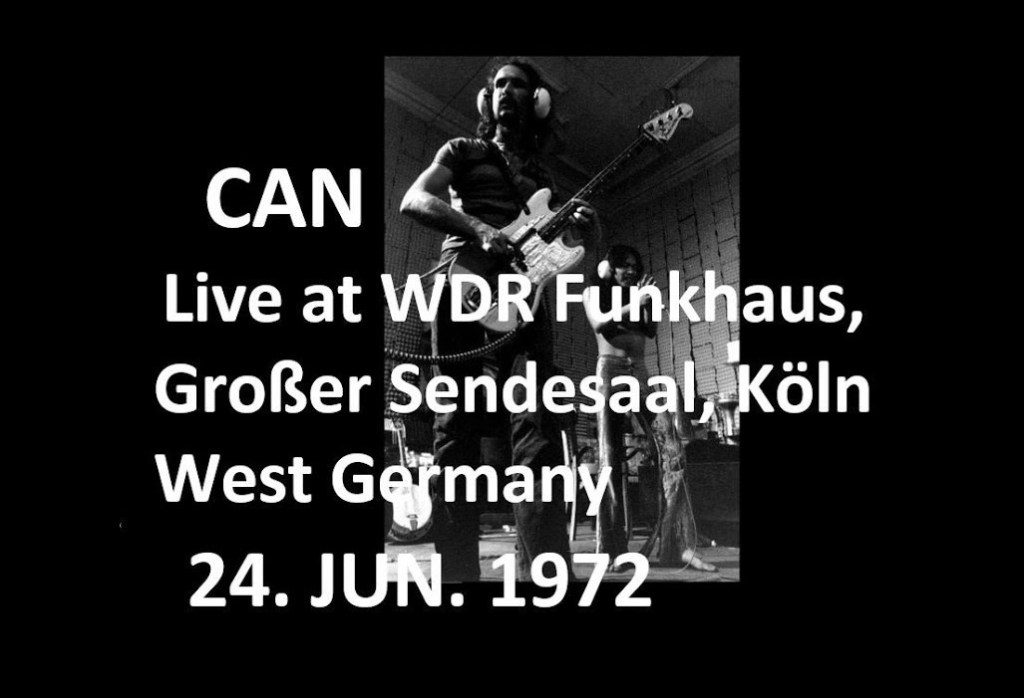
Monday 24th – WDR Funkhaus, Cologne: Can
It wasn’t a promising night for fantastical music in the UK, so the solution was clearly to travel to the WDR Funkhaus concert hall in Cologne, where a live performance by – cue our very best John Peel voice – the mighty Can was being beamed out on local radio. The fabulous results, still capable of sounding both intimidating and beautiful, can be found at youtube. To listen in 2025 to, say, Spoon/Love Me Tonight is to suddenly feel as if nothing else matters at all. It’s that vital, that alive. How must it have come across in 1972? To my shame, I suspect it would have gone right above my head.
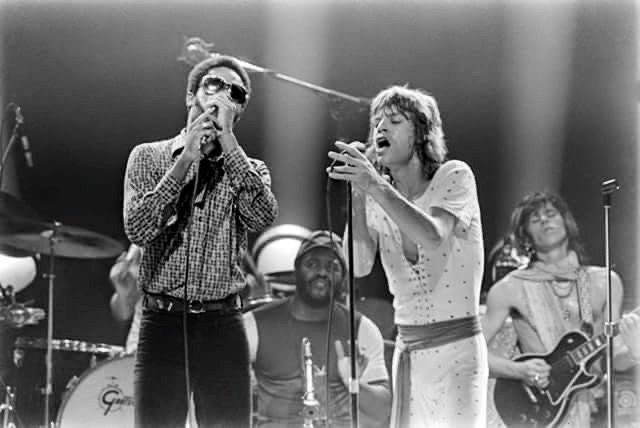
Tuesday 25th – Madison Square Gardens, New York: Stevie Wonder, supporting the Rolling Stones
Another unpromising night in the UK, so there would have been little option but to head across The Pond to New York’s Madison Square Garden to catch one of Stevie Wonder’s support slot for the Rolling Stones. (Let’s leave aside the question of how we might possibly afford a ticket for the hottest shows of the year.) Live recordings of Wonder’s live shows in ‘72 are, even for him, revelatory. The Stones were undeniably riding a tidal wave of adulation and notoriety that had powered their tour to previously unimagined levels of ticket demand and public/press clamour. But no matter how rousing their sets, and the evidence is frequently strongly in their favour, it’s Wonder’s 1972 live sets that even now sounds futuristic. Joyously and purposefully fusing genres from MOR to heavy-duty funk, the result was performances with few equals elsewhere in Wonder’s august career. The precise, ebullient bursts of jazz rock, the powerhouse r’n’b more potent than any other seen at the time, the capacity to slide from ballads to hall-raisers and back so inventively and seamlessly: it really does sounds as if Wonder is inventing a better, more all-encompassing and daring tomorrow. Nowhere is this so striking as in his vocoder-powered vocals on his appropriation of The Temptations’ Papa Was A Rolling Stone. In it, you can hear the next ten years and more of dance music, percussive, electronic, playful and life-affirming.
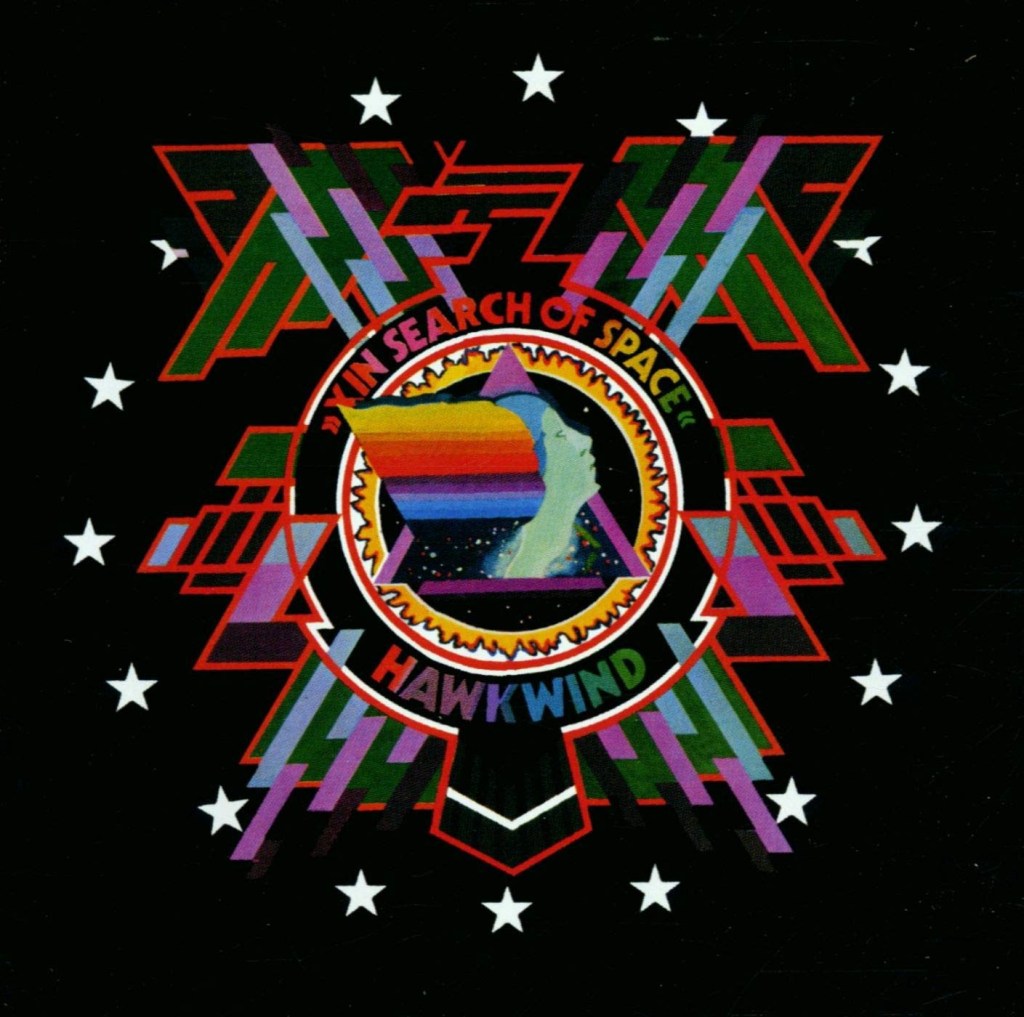
Wednesday 26th – Worthing Assembly Hall: Hawkwind
“A visitation from the cosmic prophets of unalterable apocalypse”, promised the NME, the outlandish Hawkwind now with new lights and slides. Set the controls, Worthing.”
For a moment, it was as if Hawkwind were on their way to conquering the world. Breaking out on all fronts, they were number 12 in the UK singles chart with Silver Machine. Last year’s reputation-building LP In Search Of Space was about to superseded by the soon to be recorded Doremi Fasol Latido. The live album Space Ritual, which featured recordings from their late 1972 gigs, would crack the UK top ten in the following year. Their touring concerts were genuinely epic affairs, innovative multi-media immersive events that swallowed up audiences in light and volume and the Hawk’s own brand of space rock. Their community gigs openly unified band and counter-culture and ensured that Hawkwind carried the air of something far more grounded and important than your average act.
Even if you didn’t like Hawkwind, it would’ve been something to see them and all the junior space cadets at Worthing Assembly Hall. It wasn’t just a future being played out. It was something absolutely vital to 1972.
The Almanac Of The Fantastical will return tomorrow

 The Almanac Of The Fantastical