
It seems rather odd, at a remove of 53 years, to see Alejandro Jodorowsky getting second billing on a Rolling Stone front cover, his name sandwiched between those of Van Morrison and the Grateful Dead. But the article, by Robert Greenfield, fully deserves its high billing, being a fascinating, and an often depressing and even terrifying, look at the making of his surrealistic Magic Mountain – or as we know it, 1973’s The Holy Mountain – movie. (You can read the first section of it at Rolling Stone online here, although, in pointing you there, contemporary mores insist that I add a trigger warning too.) The piece also offers hugely valuable insights into the period’s counter-culture at one particular extreme, in all its ambition, arrogance, creativity and callousness. As such, Greenfield’s report is a vital dispatch from a very strange front. After all, it’s surely undeniable that anyone interested in the fantastical needs to pay serious, if most certainly not uncritical, attention to Jodorowsky’s career. But it’s a grueling and grubby read for all of that, as indeed it needed to be. It strikes me that, to take but one example, anyone reading about the staging of the rape scene herein should immediately grasp why intimacy coordinators might just be a very good thing indeed.

Towards the back of the magazine, Lester Bangs reviews Hawkwind’s In Search Of Space. In a carefully structured argument belying the more facile accounts of his writing, Bangs sets out to sketch the history of Starships in rock and roll before placing Hawkwind’s newest LP in the tradition. True, that fact that Bangs doesn’t mention the band or its music until the sixth of sixth paragraphs means its tough to believe that he was particularly interested in Hawkwind or its music. As was often true for Bangs’ writing, his interest was often sparked, for good and ill alike, by something other than the broad strokes and details of the tracks he was supposed to be reviewing.
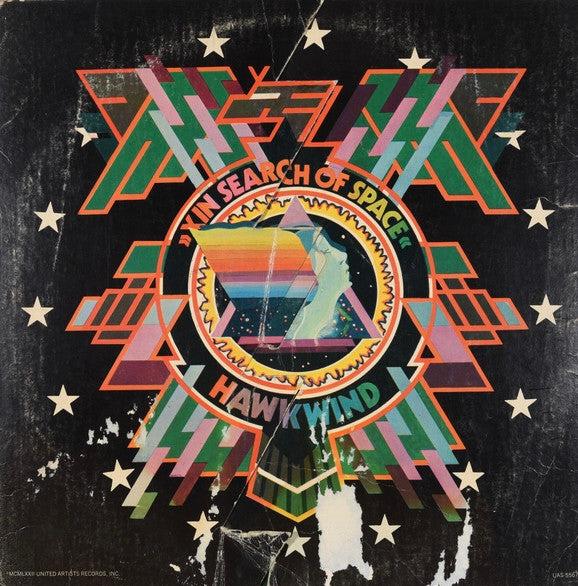
Still, it’s genuinely fascinating to read Bangs creation of a distinct body of sci-fi music, which, to take but one distinguished example, Jason Heller discussed with such knowledge and zest in 2018’s Strange Stars: David Bowie, Pop Music And The Decade Sci-Fi Exploded.
Ultimately, Bangs’ conclusion was that Hawkwind’s music was beautifully packaged but essentially regressive. That didn’t mean it was without virtue. For Bangs, anything which stood in defiant opposition to the likes of James Taylor’s Fire’n’Rain had its virtues.

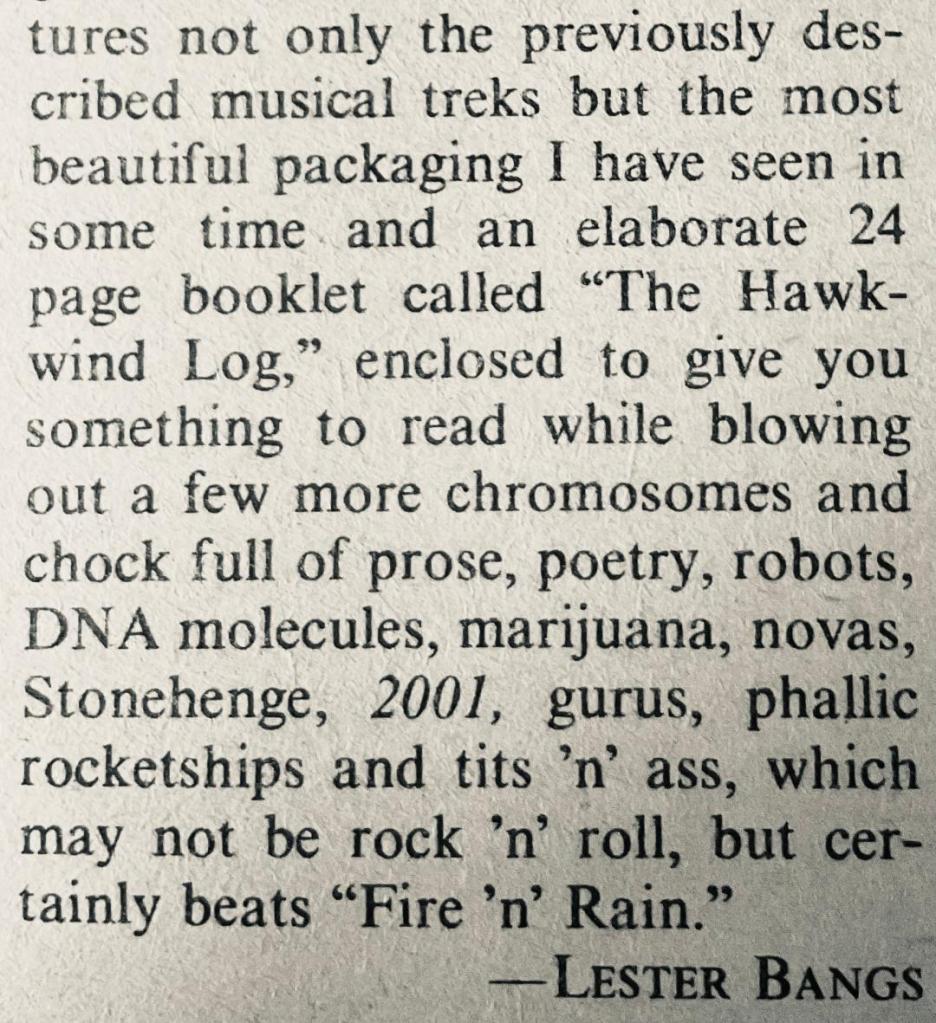
From where I’m sitting as I’m typing this, I think Bangs lacked an understanding of the genre, musical and social contexts that helped make Hawkwind so exciting and so vital in the period. But as a prime example of his own (considerable) strengths and weaknesses, Bangs’ review of In Search Of Space is just about perfect.

Finally, an ad for an Underground Comix mail-order service in Holland. For those willing to take a chance with overseas box numbers, the complete absence of regulatory oversight, and the fervor of British customs officials when faced with supposedly corrupting periodicals and merchandise, it would have been a welcome chance to order titles and the like which went largely unseen in the UK.
But overall? Well, I wouldn’t have …

 The Almanac Of The Fantastical