David Pelham has insisted that he’s dissatisfied with his cover for 1972’s first Penguin Books edition of Anthony Burgess’ A Clockwork Orange. With Stanley Kubrick’s film adaptation of the novel generating both ticket sales and public debate, the rights to a paperback edition of the book all but guaranteed healthy sales. But with that came a considerable measure of pressure as well as professional responsibility. Pelham, fresh to the job of Penguin’s Art Director, received no help at all on the project from Stanley Kubrick, who quite deliberately put the law to use to prevent Penguin from appropriating any aspect of Philip Castle’s original 1971 movie poster.
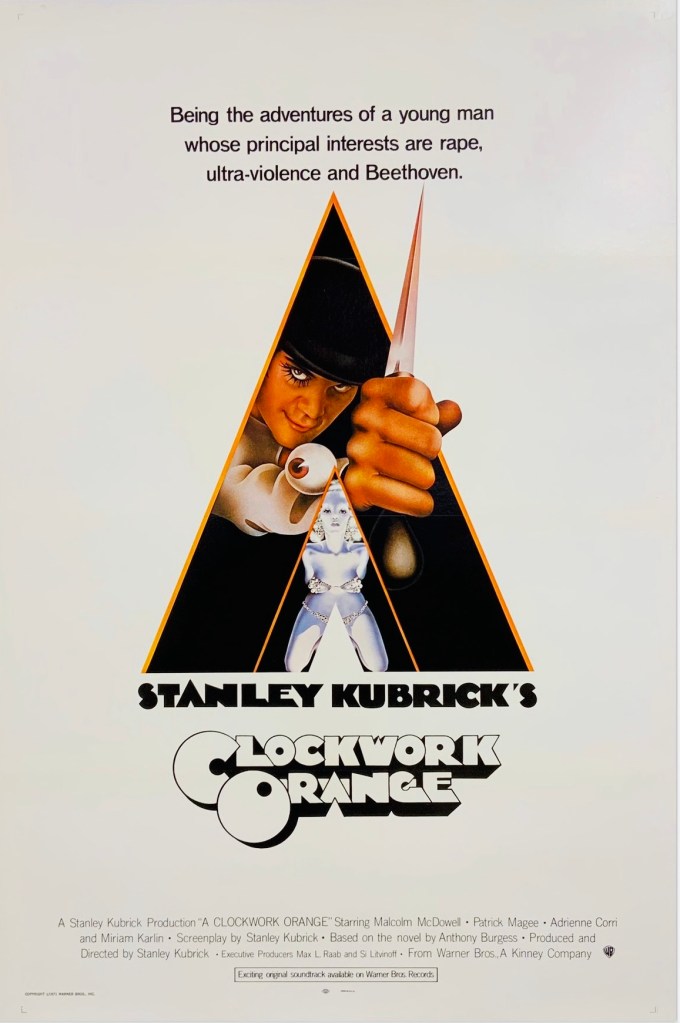
Denied access to imagery that already seemed iconic, Pelham was faced was the challenge of designing a piece which sat well with Castle’s poster while simultaneously establishing its own identity. To be both instantly recognisable and significantly different is no small challenge. To pile disaster upon challenge, the artist commissioned by Pelham to pull the trick off delivered, at night-on the last moment, an underwhelming cover. With no other solution in sight, Pelham took himself home and created the soon-to-be iconic cover overnight. Such was the pressure of the process that Pelham would always insist that he could see little but mistakes in what to him was the barely finished work.
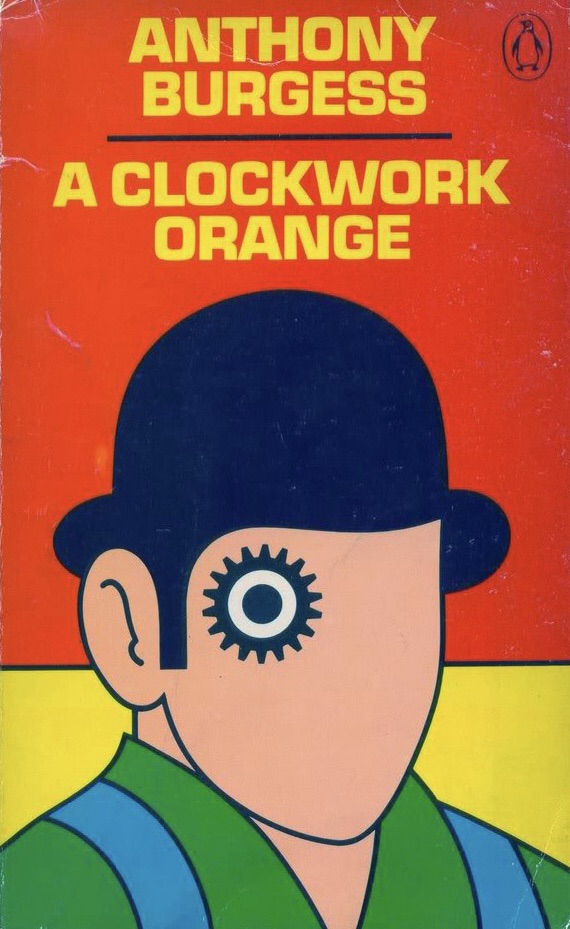
With no little irony, Kubrick took to Pelham’s cover, which he saw on a Canadian printing of the Penguin edition. When the director reissued his movie with a few seconds worth of edits in 1973, in order to secure a less restrictive age certificate in America, he hired Pelham for the poster in order to sign up that the movie was, if only slightly, a different beast. We can only hope that Pelham felt that he’d produced a design that was more technically satisfying.
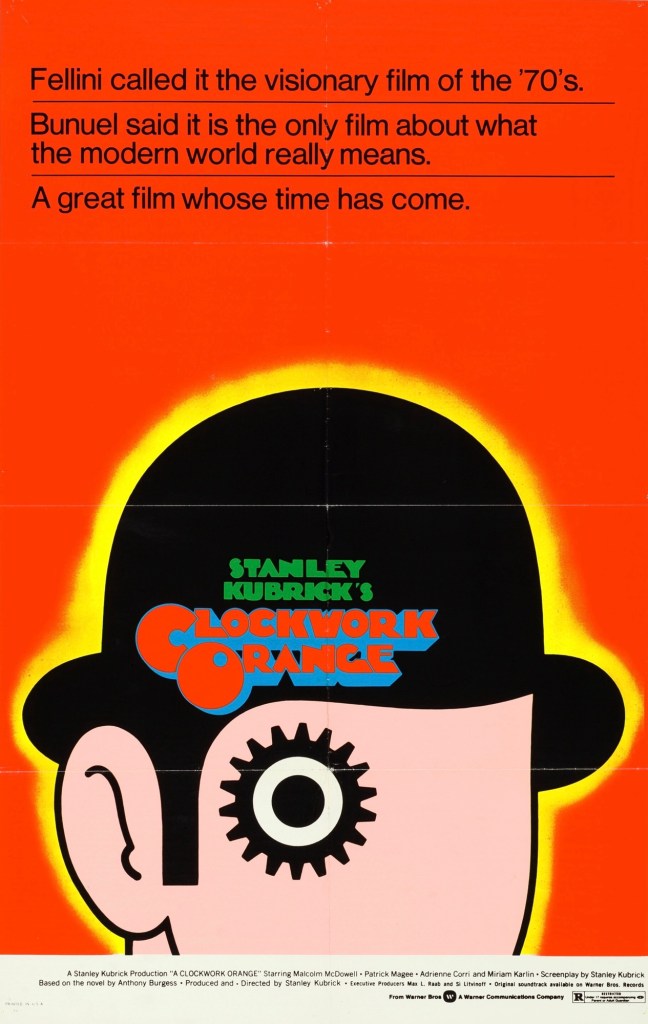
Pelham’s cover had a far greater everyday presence in 1972 than Castle’s posters while simultaneously. With Kubrick’s film only showing in a single London cinema, there was no point in a national fly posting campaign. But the Penguin paperbook was on regular view in newsagent’s display racks and on bookshop shelves. Such were the paperback’s sales that the book was reprinted twice before 1972 was over. Long before Kubrick gave the nod for A Clockwork Orange’s general release into the UK’s local cinemas in 1973, Pelham’s cover had fixed itself as one of age’s most well-known and compelling images.
,

 The Almanac Of The Fantastical