The perennial challenge of Sundays in the Seventies was always, what on Earth to do? This was especially true when it came to the fantastical. Yet for the period between 7th June and 23rd July in 1972, London’s Hayward Gallery hosted a remarkable exhibition of French Symbolist Painters. With more than 330 works on show, it was the first of such shows to be held in the United Kingdom. (Even its catalogue, a copy of which sits before me as I type this, was a hefty affair of 170 pages.) In standing in opposition to both classical realism and Impressionism, the (very) broad church of Symbolists painters represented a purposefully subjective worldview, rife with the language of dreams and the obsessions of the age’s counterculture, including magic and mystery traditions. A Sunday afternoon visit to the Hayward during those weeks would have surely been both captivating and inspiring for anyone with an interest in unseen worlds.
Below are just a few examples of the artwork listed in the exhibition’s catalogue. They’re not intended to be representative of either the movement or the show. They’re simply the first few pieces that really caught my eye as I flicked through the works on show. Doing so left me with an intense feeling that I’d missed out on something important and stirring, although, having been but 9 at the time, I’m not going as far in my regret as to cast blame in my direction for my non-attendance.

Silence, by Lucien Levy-Dhurmer, 1896.
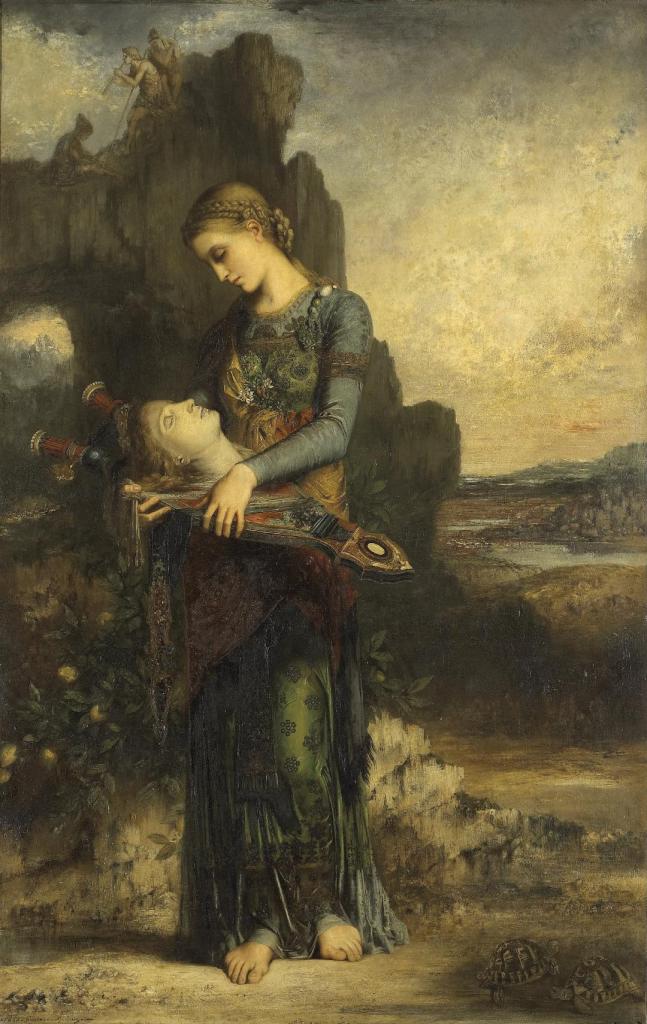
Orpheus, by Gustave Moreau, 1865.

To The Abyss, by Georges de Feure, c.1894.

Death Unites Them, by Rodolphe Bresdin, 1900.

The Chimera’s Despair, by Alexandre Seon, 1890.

The Sphinx and the Gods, by Raoul du Gardier, 1893.

Oedipus exiled from Thebes, by Henri-Leopold Levy, 1843.
(If nothing else, this wonderful collection of art reinforces my admiration for, and interest in, the several generations of comic book artists who quite evidently drew upon the Symbolist tradition for their work.)

 The Almanac Of The Fantastical