If you were wanting to book a seat for a fantastical movie in the (somewhat) more upmarket cinemas of central London during the coming seven days, you had but five options.

At the Warner West End in Leicester Square, Kubrick’s A Clockwork Orange was still playing. The film had debuted in the UK on February 2nd and would still be found playing at the same cinema a year later. Its general release in the UK wouldn’t happen until 1973, Kubrick having hoped to acclimatise the nation, and in particular its more censorious citizens, to the film’s contents before it could be seen in local dream/nightmare palaces. So, if you wanted to see A Clockwork Orange in Britain, and if you could pass for 18 given its ‘X’ certificate, Leicester Square was the only place to be. Earlier in the year, you might even have found yourself sharing seats with David Bowie and the Spiders From Mars, or, sadly, any number of those who wanted a folk devil made of the movie and a moral panic stirred up about its supposed social consequences. (Mind you, it’s hard not to conclude that many of those who crusaded against the film with such persistent and hysterical fervor hadn’t ever seen it.)
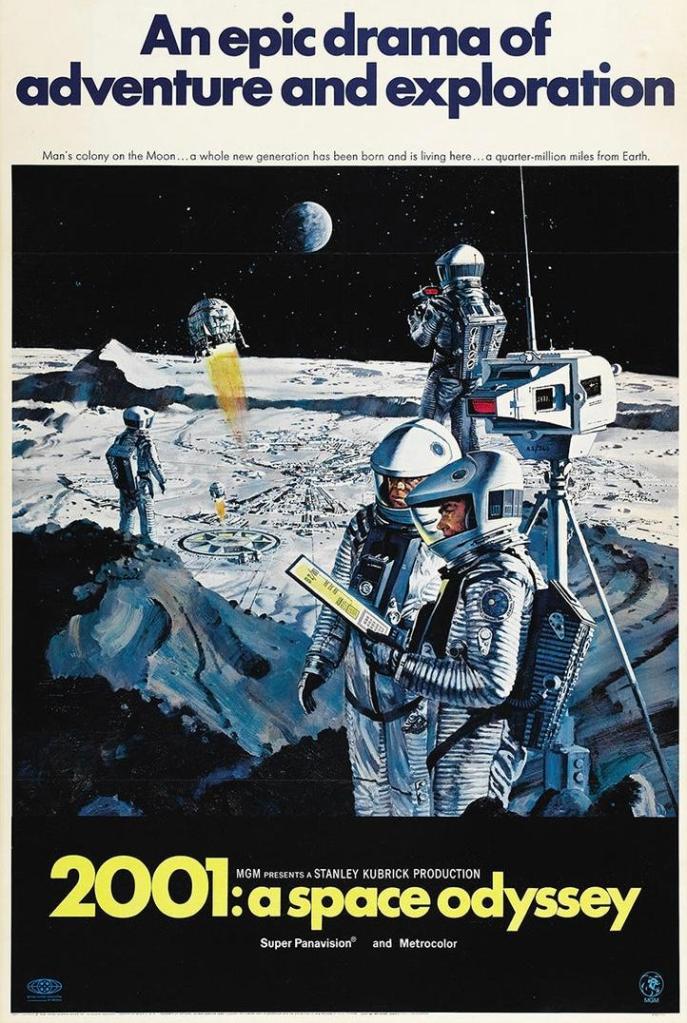
Just down the road from Leicester Square, the ABC 1 in Shaftsbury Avenue was hosting Kubrick’s 1968 magisterial 2001 A Space Odyssey. It was the third week of the film’s run on rerelease and it would keep on turning a profit right through to the middle of July, shifting to the smaller ABC 2 for a final week of performances. (I do wish that someone could have somehow surveyed the film’s punters to ascertain how many of them were using the ABC1 as a secure and inspiring haven to imbibe mind-altering illicit substances. Anecdotal evidence would suggest a significant number of them.)

It’s odd, from the perspective of 2025, to note that all but one of the fantastical films in central London’s more upmarket cinemas were from previous years. Diamonds Are Forever, for example, had been released on December 30th 1971 in the UK, but it was still felt to be enough of a draw to be playing again at the Odeon Marble Arch. (The two features that had preceded it during this month were the historical potboiler Nicholas And Alexander and Disney’s Bedknobs And Broomsticks, both again from 1971.) But in a world in which the very idea of movies-at-home-on-demand was science fiction, 1972’s cinemas were often reliant on crowd-drawing older films, as the May 26th advert below for films showing in London’s local cinemas can testify. It’s far, far easier to note a show that hadn’t first aired in 1972 than it is to find that a movie from the previous 6 months.

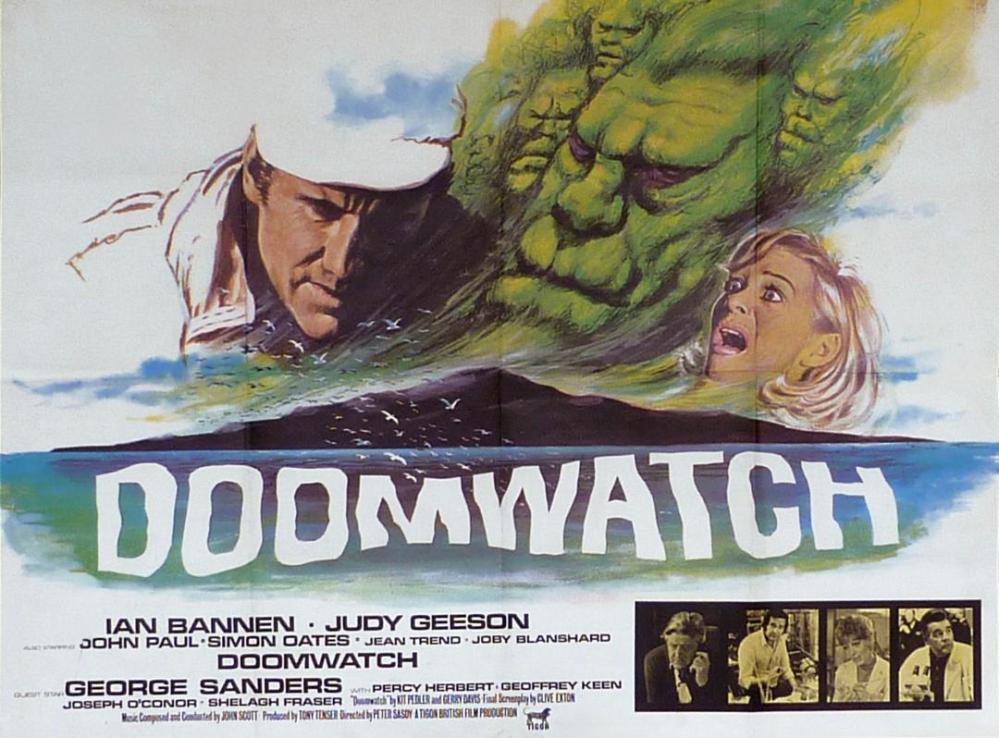
At the ABC Edgware Road, the misfiring 1972 movie version of Doomwatch, which took the BBC’s topical environmental-horror TV show and made a slack, sub-Hammer indulgence out of it. It wasn’t to linger on in the West End beyond the coming week. Doomwatch Means Terror promised the posters as the movie was quickly recycled off to local cinemas, but that really wasn’t a reliable assurance.
Finally, Roman Polanski’s 1971 take on MacBeth was continuing its lengthy run in Baker Street’s Times Cinema. At the time, there was little hint of what would be revealed about the appalling Polanski, unless you’d shared a movie set with him, as Ronald Brownstein discusses, disturbingly, in Rock Me On The Water. Instead, he was mostly regarded as a brilliant if unconventional director who’d been cursed both by his boyhood in Nazi-occupied Poland and the slaughter of his wife Sharon Tate during the Manson murders. (Mind you, Michael Davie’s In The Future Now, a study of California from this very year, does discuss how reactionaries opted to define Polanski and Tate’s lifestyle as unconventional and thereby blameworthy. To quote Davis:
“Rumours that circulated after the murders about the disorderliness of the Polanskis’ life-style were no doubt exaggerated; but it was not a style, at all events, that recognised traditional restraints. A neighbour’s verdict on the massacre was: ‘Live freaky, die freaky'”. )
MacBeth itself seemed to many to be an attempt to work out some of the trauma triggered by the terrible events of August 1969. Fast moving, bloody, chilling, with all the requisite witches, twisted prophecies and ghosts, MacBeth would become a film beloved of English teachers who wanted to keep O-level students under control during trying moments of the timetable. (Also, for the coming generations who’d become familiar with Keith Chegwin as a cheeky chappy TV personality, the sight of him playing Fleance was always cause for incredulity and laughter.)

Tomorrow: a glimpse of some of the fantastical movies playing in local London cinemas during the coming week in 1972.

 The Almanac Of The Fantastical