
Ignoring for the Almanac’s purposes the Planet Of The Apes cover feature in Summer 1972’s Cinefantastique, we arrive instead at the magazine’s film reviews. Unlike the newspaper columns discussing fantastical films that The Almanac has consulted to this point, Cinefantastique was a specialist publication. It expected its audience to be interested, enthusiastic and informed. Here, there was no need felt to apologise for genre movies and no attempt made to justify taking them seriously. Accordingly, the magazine gives us a noticeably different take. In its pages, we’re entering the world of what would become known as geek culture.
It is with considerable relief that The Almanac turns to Cinefantastique to discover what its writers thought of the age’s most important releases.

Of 1971’s A Clockwork Orange, Dale Winogura observed that “Anthony Burgess’ novel is a perfect starting point … but Kubrick gives it the unseen dimension through the very intrinsic power of his visual and verbal austerity. Much more than just originality and cleverness of production detail, he lends ACO a quality of fable, eerie satire, and impressionistic intensity that never touches the book. It is a film by Stanley Kubrick, every frame, and Burgess’ albeit brilliant vision is underemphasized to the point of obscurity … it was made to be experienced, not read about. It demands to be seen and felt with alive sensibilities, keen intellects, and fresh emotions. It is a work of incomparable, insurmountable greatness.”
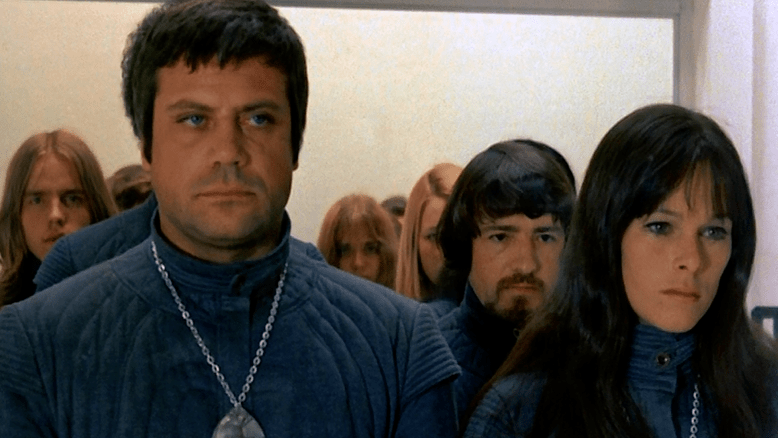
Z.P.G.
1972’s eco-thriller Z.P.G., or Zero Population Growth, disappointed Dan R. Scapperotti:
“Social relevance is fine and commendable in a commercial film, but it should not get in the way of the film’s primary function as entertainment. Z.P.G. for the most part fails to entertain, it lectures.”

MACBETH
David Bartholomew wrote about Roman Polanski’s MacBeth with considerable enthusiasm, seeking as he did to emphasise that the 1971 film was never gratuitous in its use of violence:
“One hesitates to use the word realistic, especially in describing a filming of a 17th century play about play about (circa) 13th century Scotland. Yet it is this cutting edge of believability, hence feeling, infecting Polanski’s MacBeth that finally triumphs/ Shakespeare’s classic, like many ‘classics’ that are never fully rendered concrete or rationally believable beyond the poetry, is transformed into a drama stepped in heroic, not inflatedly noble or detached, human dimensions which attain a vibrant life on the screen. There is probably a MacBeth even more impressive yet to be made, but until it is conceived, Polanski’s version stands well to the foreground as a masterful achievement.”

EL TOPO
Alexandro Jodorowsky’s El Topo, from 1970, receives a terrible kicking from Dale Winogura. Having once, in all innocence and good faith, criticised a comic written by Jodorowsky’s, and received a wave of furiously outraged missives in response, I can’t help but wonder what furies were launched in Winogura’s direction when this saw print.
“It is just as easy to make jokes about Alexandro Jodorowsky’s film El Topo as it is to fall into the pseudo-intellectual trap of praising it. This beef-stew of western myth, eastern philosophies, biblical references, and surrealism is one of the worst pieces of pretentious garbage ever made … This is a repulsive, evil film, full of crass commercial appeal to easily conned film students with tv-ridden, kindergarten minds. El Topo is a masturbatory fantasy of torment, torture, pain, death, destruction, and decay, and it has no power to convey its obsessions with any kind of force, believability, or compassion. It’s a boring nothing, easily the worst film of 1971, and possibly one of the most thoroughly execrable, meretricious, and ugly in all its aspects, films ever made.”
It’s enough to make The Almanac want to see El Topo ASAP.

 The Almanac Of The Fantastical