
There were (relatively) rare moments in the period when evidence surfaced that some clear trace of Science Fiction had broken through to the mass audience to become part of everyday language. In the Town And Country Notes in July 15th 1972’s Darlington And Stockton Times, for example, an anonymous writer discussed a report from Middleton St. George Parish Council, no less, about the dangers of the giant hogweed. The plant, the columnist wrote, was “a much maligned arch-criminal (which) stands accused of giving children rashes and causing second-degree burns with its sap”.
The giant hogwood, the writer informed us, had been “brought to Kew Gardens from the Causasus about 70 years ago, (from where) it broke out.” To fans of the progressive rock band Genesis, that part of the kidnapped – and allegedly rebellious – plant’s history was well known. On the band’s 1971 album Nursery Cryme, the tale of The Return Of The Giant Hogwood sits as track three on side one. But if its lyric begins with a recognisable nod to historical reality, its narrative soon takes an apocalyptic turn. Every river and canal is clogged. Every city has been infiltrated. The plant seems “invincible”, the remaining human beings driven to seek shelter during the daytime while fighting back, futilely, at night. It is, as singer Peter Gabriel insisted, “an onslaught, Threatening the human race”, an assault which, the song’s last verse tells us, is a matter of revenge and anger on the part of a clearly conscious and enraged species.

The Return Of The Giant Hogwood is a hugely enjoyable and distinctly traditional British tale of disaster and horror. Noticeably, it doesn’t reference the 1960’s innovations of the likes of J. G. Ballard in novels such as The Crystal World, in which the supposedly middle-class conservatism inherent in the likes of The Day Of The Triffids, with its ultimate restoration of a middle class social order, are rejected. The Genesis song leaves its story incomplete, but with its evil “alien” lifeform and its few plucky, still-fighting survivors, it feels alot closer to H. G. Wells than to the New Wave sci-fi of the previous ten years or so. It isn’t about Ballard’s Inner Space, it’s a widescreen blockbuster about marauding fauna and the prospect of the end of everything. In that, it stands as a very 70s kind of eco-disaster tale.
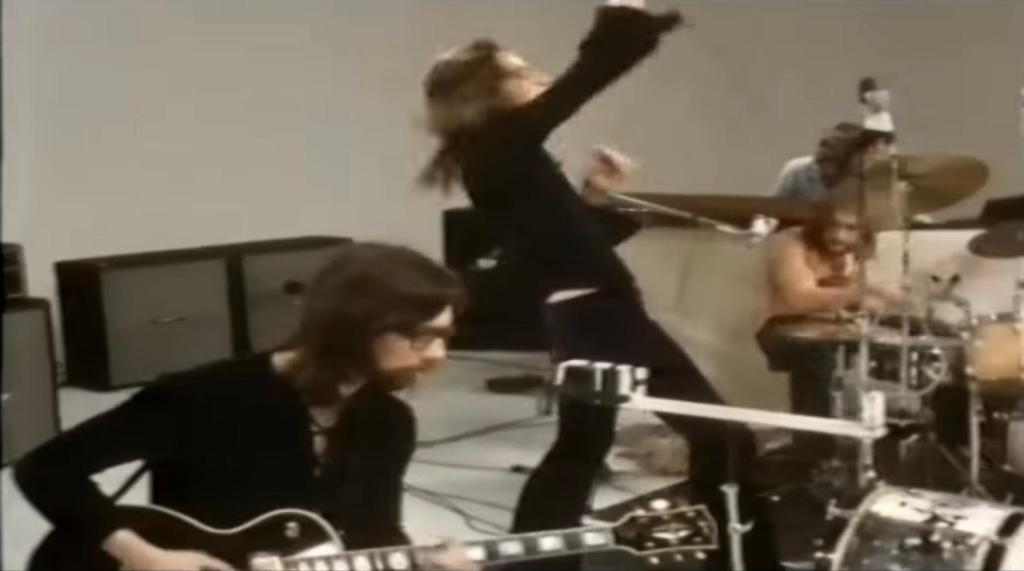
On tour in July 1972 in Britain, Genesis played The Return Of The Giant Hogweed as the set-accelerating penultimate song of every set. On the night before the Darlington And Stockton Times article was published, the band had played at London’s Lyceum. On the night after, they played the Redcar Jazz Club in Redcar’s Coatham Hotel. Back and forth across the nation they travelled, as if condemned to a restless life on the UK’s third division road network, breaking stride only to do the very same thing overseas or, once a year, to record an album. So they slogged on, locked into the bubble of the music business and the particular constraints of its developing progressive rock tradition, glad for their opportunities, excited for the possibilities, entranced by the processes of writing and playing. Consequently, there is a temptation to think of the band as it then stood solely in terms of genre and career. The age and its many troubles seems to be, beyond a certain nostalgia for better times long gone, something that Genesis weren’t ever concerned with.
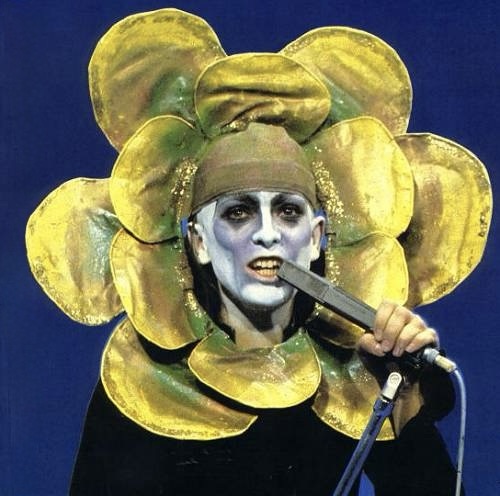
But as they trekked backwards and forwards, or more often sideways for the while, Genesis’ music carried more of the everyday than was, or even still is, widely recognised. The 1970s kept bubbling up in their music, and it was usually due to Peter Gabriel’s insistence on drawing on current affairs and future social concerns to inform his songwriting contributions. On the soon-to-arrive Foxtrot, for example, fans would glimpse sight of the twin then-contemporary crises of callous urban development and criminal landlords in Get ‘Em Out By Friday. On 1973’s Selling England By The Pound LP, Dancing Out With The Moonlit Knight would summon up specters of American cultural imperialism and Britain’s careless decline. And from 1970’s Trepass, The Knife, which was used to follow The Return Of The Giant Hogweed and close the band’s nightly sets, plays out a tale of rabblerousing and political violence which carried echoes of the revolutionary rhetoric and terrorist groups which, post Paris 1968, stalked America and Europe alike. And even if we wouldn’t, couldn’t, define The Return Of The Giant Hogweed as in any similar way political, it most did reflect contemporary conversations and concerns about the plant and its supposedly malign behaviour.

Just the band had, the Darlington And Stockton Times article lent giant hogweed a sense of character and motivation, although the paper by contrast portrayed a blameless creature undergoing slander and persecution:
“The giant hogweed flourished with no stain on its character until just four years ago this week when Yarm Parish Council caused an outcry by complaining about a bank of hemlock … along the river. The hemlock turned out to be giant hemlock .. Each summer now newspapers print pictures of 15 foot high specimens and parents take complaints of its unfriendly action to doctors and their local councils”.
Rather wonderfully, for the purposes of The Almanac Of The Fantastical, the Town And Country Notes column also referenced John Wyndham and his famous/infamous, man-eating and freely-wandering plant creations. When touching upon the way in which giant hogwood had long ago escaped from the confines of Kew Royal Botanic Gardens – how very deliciously Victorian that sounds – the similarity with the breakout of the Triffids in Wyndham’s novel was noted. Because of course it was. The Triffids are even now part-and-parcel of how we as a culture discuss scientific hubris, social vulnerabilities and really big and frightening plants.

 The Almanac Of The Fantastical
One thought on “July 15th 1972 – Giant Hogwood, Terrible Triffids & Genesis”